
Creating a personalized home is a major task that needs loyalty and knowledge. Building a property from the foundation could be satisfying. Still, it could also be hard, especially when it’s the first time you do it. A technical background is not needed for accomplishment. Making choices, postponements, and increasing bills are difficulties faced by numerous individuals. Stress rises when planning seems unpredictable. You can avoid such kinds of nervousness with the right approach.
This blog will help you understand the whole method. It’s important to know each step if you’re thinking about construction house. You can remain within your means and prevent mistakes by following this.
Get a quoteStep 1: Spending and Organization
Proper planning is the first step in the Canadian home-building process.
- You must make a plan for money before you begin doing anything.
- Following that, select an area for your building project. It means that you have to search for a property in the location that you want.
- Check to see whether you can build there.
To help with your plan and price calculation, you may want to hire a builder and architect as well. A house under construction could start with greater speed. Stay away from pointless comparisons among projects. Each location has various conditions.
Step 2: Receiving Licenses and authorizations
You have to stick to regional building regulations. Licenses from the town and city offices are needed before you begin the building process. These include permits for construction and planning approvals. Sometimes, it may also include ecological checks. Partnering with an expert who is educated about specific regulations is recommended. They will help you with creating the necessary paperwork. They might help you in preventing mistakes that might end up in long waits.
Step 3: Base Construction and Site Installation
The site is going to be set up by the builder. This includes preparing the surface and cutting down trees. Also, short-term power and water lines will be set up. The groundwork is next. This is an essential part when constructing a house. To lay a firm base, workers dig up and apply concrete to it. It could take up to two weeks to accomplish this process. The environment and the measurement of the home are going to decide it. While the ground is set up and set aside, the building process will begin.
Step 4: Building and Framework
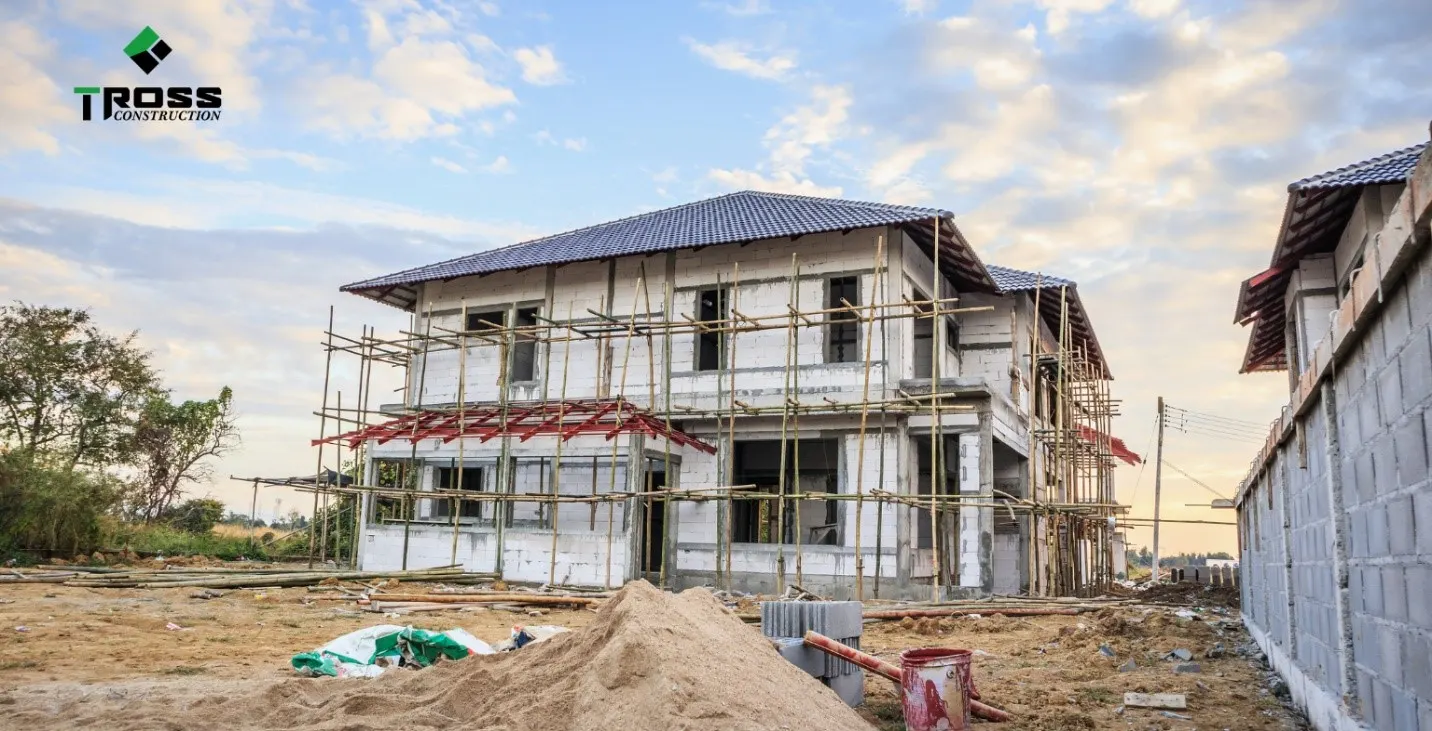
The home is starting to take form. The wood and steel frame is being constructed by construction workers. The covering of the roof and boundaries is covered in it. In this stage, a surface is additionally created. Even though it remains incomplete, the future home is going to look like a real structure. The workers afterwards set up windows and doors. A roofing system is put on top in the hope of securing the interior space from rainfall and wind. The structure itself is one of the most beneficial aspects, as it helps you gradually get around it.
Get a quoteStep 5: Supplying More Details
Shortly after completing the outside partitions, the next thing to do is to set up every system that a home has to keep running properly. It includes the following:
- Plumbing for water and waste pipes in the house
- Electric connections: wiring for lights and other devices
- Refrigerators and engines with combustion are examples of such heat and cooling equipment.
As soon as these are set up, inspection squads will look at them for defects. They perform this step to guarantee that all things are safely stored. Next is insulating. This maintains your home refreshing in summertime while remaining warm in the cooler months. Given how often the climate changes, it is important to consider home construction.
Step 6: Outside and Internal Tasks
It’s now time to get started on both the interior and exterior coatings. Staff members set up carpeting and colored the walls that are within. They set up lighting and bathrooms. They finish the structure’s roof and the siding outdoors. If needed, they add outdoor spaces and terraces. The location starts to really feel like its own home at this point in time. According to your tastes and available funds, you may choose the hues and substances. Speak to the contractor and go to the spot regularly. Do you wish to change anything? The most suitable time for doing it is right now.
Check out our related blog posts.
Step 7: Evaluation and closing touches
The property has to pass an additional review before you move into it. The local authority is in control of this matter. They look at each detail, like the construction and security details. An “occupancy license,” which confirms that the property is suitable for occupancy, is provided to you when every detail is in good condition.
Also, the contractor is going to walk you through your new home and show you how everything works. They could fix any small problems. This phase helps create the sense of fulfilment that comes with constructing a home.
Managing a House Although It’s Being Developed with Acceptable Demands
There are small delays for every house under construction. Stops are brought about by the environment, supply issues, and checks. It takes time to come to terms with these realities. False hopes result in constant frustration. Monitor growth in connection with standards instead of on every single day. Regular modifications result in unnecessary stress.
Conclusion
While construction house is an enormous task, it may be easy and satisfying if one has the correct team and knowledge. You are able to make intelligent choices, avoid mistakes, and ensure an excellent result by staying informed about each stage of this procedure. With understanding, any challenge becomes possible. Without interference, you retain authority. Your home takes form without pulling you out psychologically. We at Tross Construction are committed to serving individuals at all levels. Whether you are commencing from the beginning or modifying your current design, our team of professionals can help to achieve the result you are looking for.
FAQ
1. Can a home undergo construction in the wintertime?
True. Yet, it is more challenging. One routine job that might get stopped by cold temperatures involves putting down mortar. Many individuals start working in the spring or during the summer.
2. How much time will it take to build a house?
On average, it lasts from eight to 12 months to complete. The measurement of the home and the outside conditions influences the amount of time it requires.
3. Does constructing a home need to include a professional architect?
It is helpful, however, not every time. Some developers offer ready-made layouts. A designer can be useful for custom-built houses.
4. What price does it normally cost to construct a house?
Costs vary based on where they are located. It also relies upon the materials that are being applied. Further, it will depend on which sort of house you desire to build.
5. Is it cheaper to build or buy a home?
Not all of the time. It depends upon a variety of factors. You may plan all of it as you build it. But the starting price could be higher. Buying one provides you with fewer options but is simpler.
Get a quote