
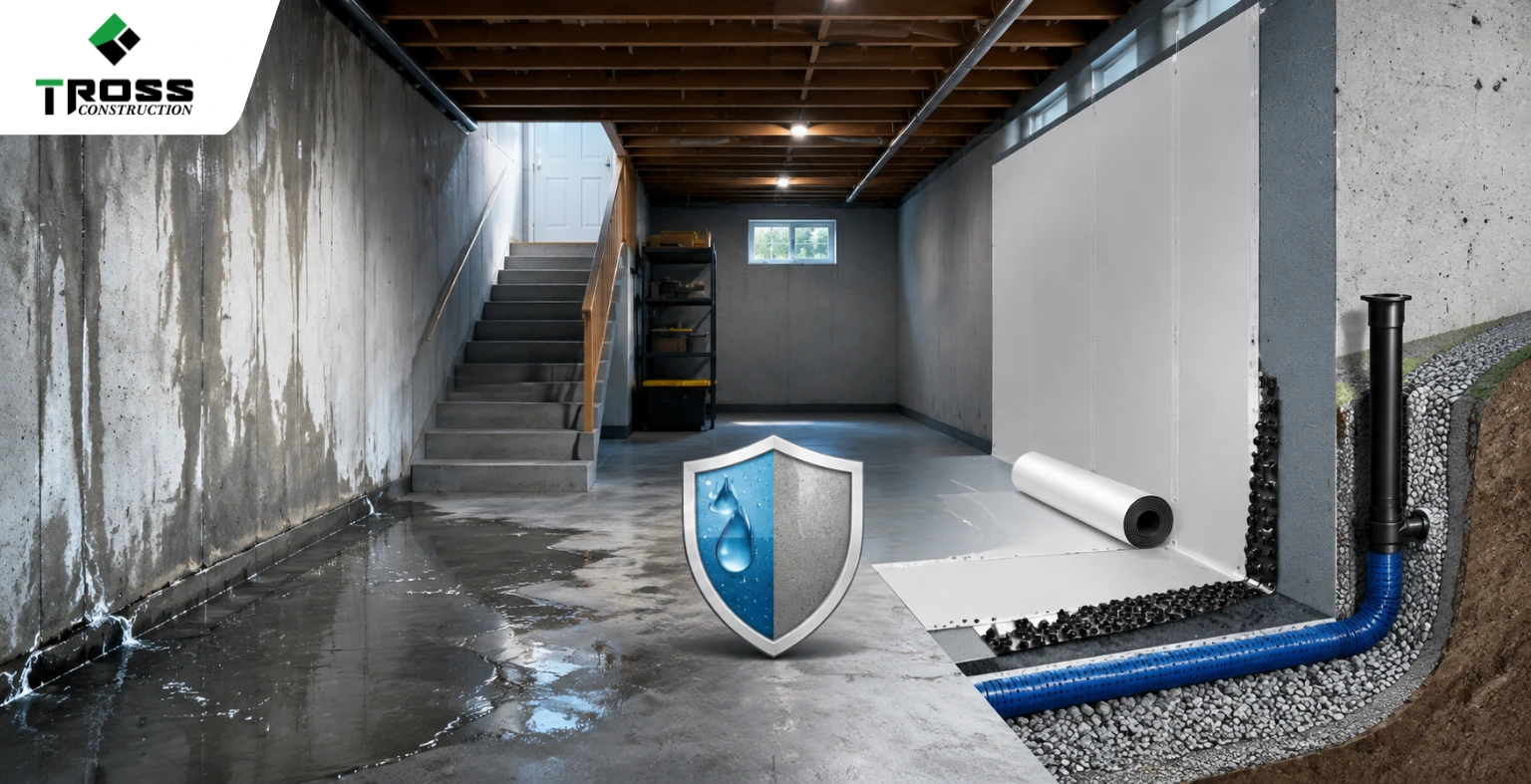
Many homeowners face the persistent challenge of basement moisture, a problem that can compromise structural integrity and indoor air quality. You can effectively safeguard your home against water damage by understanding interior waterproofing methods canada. This guide outlines proven strategies and systems for a dry, healthy basement environment.
Understanding Interior Basement Waterproofing in Canada
Local Climate Challenges and Hydrostatic Pressure
Canada’s freeze-thaw cycles and heavy precipitation contribute to significant hydrostatic pressure against basement walls. You will find that these conditions exacerbate water infiltration issues, making robust waterproofing vital for your home.
Why Canada’s Homeowners Prioritize Interior Solutions?
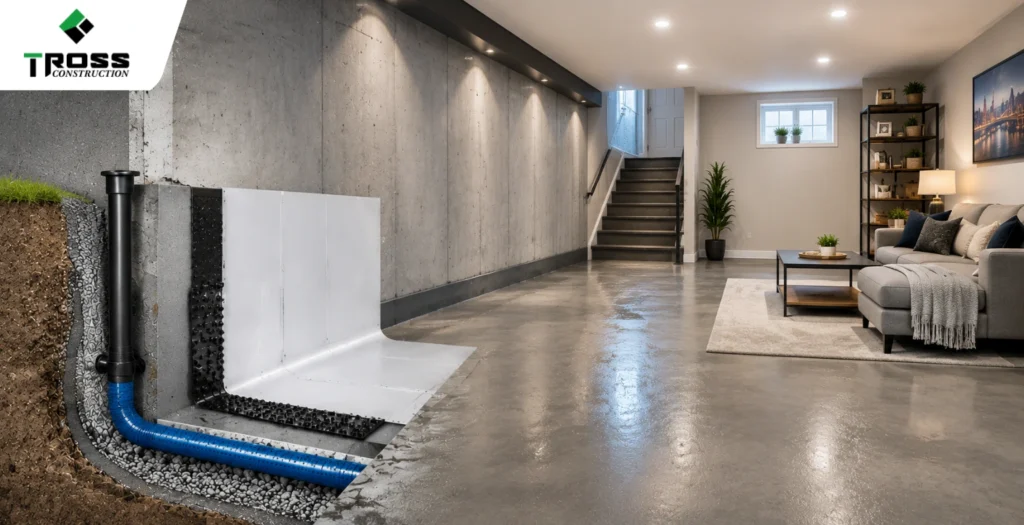
Given the city’s specific environmental factors, interior waterproofing offers a controlled and often less disruptive approach. You can address water entry points directly from inside your basement, avoiding extensive exterior excavation. Homeowners frequently choose interior solutions because they are generally more cost-effective and quicker to install compared to exterior methods, especially in developed urban areas like Canada, where property lines are often tight and landscaping is established. You maintain your yard’s integrity, and the work proceeds regardless of external weather conditions, offering a distinct advantage during the city’s long winters.
Common Types of Interior Waterproofing Systems in Canada
Several effective interior waterproofing systems exist, each designed to address specific types of water intrusion. These systems manage water once it has entered your basement, directing it safely away from your foundation. Understanding the distinctions between these methods allows you to choose the most appropriate solution for your home’s unique needs. Knowing the options available helps you make an informed decision.
| Perimeter Drainage Systems | Collect water entering at the wall-floor joint. |
| Vapor Barriers | Prevent moisture penetration through walls. |
| Sump Pumps | Evacuate collected water from the basement. |
| Crack Injections | Seal individual foundation cracks. |
| Waterproof Coatings | Apply directly to interior surfaces for minor dampness. |
Perimeter Drainage Tile and French Drains
These systems are installed along the interior perimeter of your basement, collecting water that seeps through foundation walls or up from the floor. The collected water then flows to a sump pump for discharge. This method effectively relieves hydrostatic pressure, preventing water from pooling on your basement floor.
Vapor Barriers and Specialized Wall Membranes
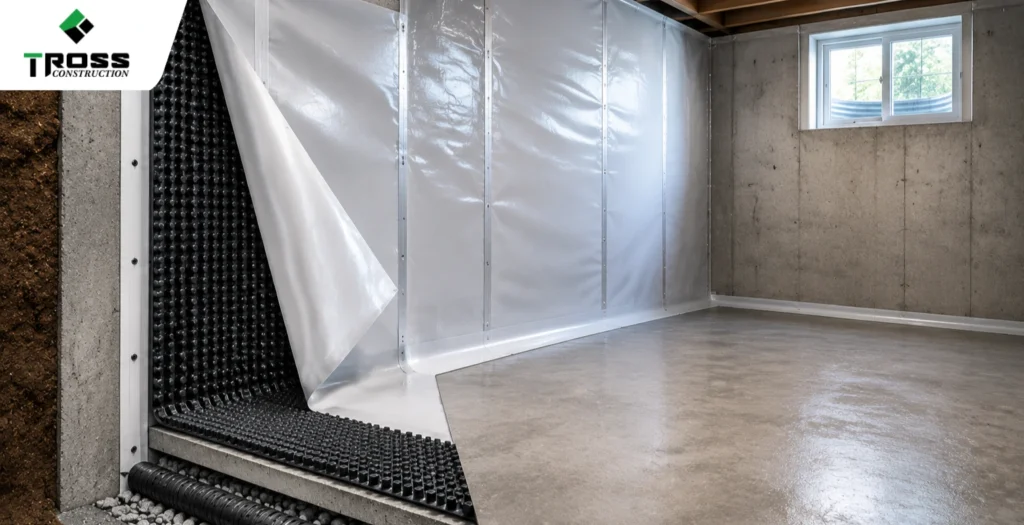
Vapor barriers and specialized wall membranes are applied directly to the interior surface of your basement walls. They act as a protective layer, preventing moisture from passing through porous concrete or masonry. These membranes redirect any seeping water downwards into a perimeter drainage system, keeping your walls dry and inhibiting mold growth.
Wall membranes, often made from durable polyethylene, typically feature an air gap or dimpled design behind the sheet. This design creates a channel for water to drain freely to the sub-floor drainage system, preventing it from saturating the wall. Some advanced membranes also incorporate antimicrobial properties, offering an extra layer of protection against mildew and odors in the basement environment.
Critical Factors Influencing Your Waterproofing Strategy
Several elements dictate the most effective interior waterproofing approach for your home. You must consider these variables to ensure a lasting solution. Your home’s age and construction play a significant role. Assume that ignoring these aspects could lead to recurring moisture problems.
Foundation Material and Existing Structural Integrity
The type of material forming your foundation, whether poured concrete, block, or stone, directly impacts sealing and drainage options. You need to assess any existing cracks or previous repair attempts. These factors will influence the specific products and techniques a professional will recommend.
Water Table Levels and Soil Composition
Your local water table’s height and the surrounding soil’s characteristics are paramount. Clay soils, for instance, retain water differently than sandy loams, affecting hydrostatic pressure against your foundation. This pressure can force water through even minor imperfections.
Understanding the soil around your home provides critical insight into potential water intrusion points. A high water table, especially after heavy rainfall or snowmelt, means greater pressure on your basement walls and floor. Expansive clay soils can swell when wet, creating immense lateral forces, while sandy soils allow water to drain more quickly but can still transmit hydrostatic pressure if drainage is inadequate. You should investigate local hydrological data, often available from municipal planning departments, to understand these environmental influences on your property’s specific conditions.
Step-by-Step Installation Process of Interior Waterproofing by Tross Construction in Canada
A professional installation ensures the effectiveness and longevity of your interior waterproofing system. The following table outlines the comprehensive process undertaken by Tross Construction, detailing each critical stage from initial preparation to final system integration.
| Installation Step | Description |
|---|---|
| 1. Site Preparation and Protection | Crews clear the work area, relocating obstructions and covering floors and furnishings to protect your home from dust and debris during the installation. |
| 2. Trenching and Concrete Removal | Workers carefully saw-cut and remove a section of concrete slab around the perimeter of your basement wall, creating a trench for the drainage system. |
| 3. Wall Membrane Installation | A dimpled membrane gets applied to the interior basement walls, directing any seeping water downwards into the newly formed drainage trench. |
| 4. Internal Drainage System Setup | Perforated drainage pipes are laid within the perimeter trench, designed to collect water effectively and channel it towards the sump pump. |
| 5. Sump Pump Integration | A high-capacity sump pump is installed in the lowest point of the basement, ready to collect and expel water from the drainage system. |
| 6. Concrete Restoration | The removed concrete slab is meticulously re-poured and finished, restoring your basement floor to its original condition while concealing the new system. |
| 7. System Testing and Cleanup | The entire waterproofing system undergoes thorough testing to confirm proper function, followed by a complete cleanup of the work area. |
Trenching and Internal Drainage Setup
Workers precisely excavate a trench around the basement’s interior perimeter, removing a section of the concrete slab. Perforated drainage pipes are then meticulously placed within this trench, forming the primary collection point for any water entering your basement.
Sump Pump Integration and Discharge Configuration
A robust sump pump is strategically installed at the lowest point of your basement, often within a pre-dug pit. This pump acts as the heart of the system, receiving all collected water from the internal drainage network.
The sump pump’s discharge line, typically made of PVC, routes water safely away from your home’s foundation to an appropriate exterior discharge point, such as a storm drain or an area graded away from the building. Proper configuration prevents water from recirculating back towards the basement, ensuring long-term protection.
Pros and Cons of Interior Methods in Canada
Considering interior basement waterproofing involves weighing its distinct advantages against certain limitations. Homeowners often find these methods appealing for their accessibility and immediate impact on basement dryness, though they do present specific considerations regarding external foundation health. Understanding these points helps you make an informed decision for your property.
| Pros | Cons |
|---|---|
| Typically less expensive than exterior methods. | Does not address exterior hydrostatic pressure. |
| Installation possible year-round, regardless of weather. | Requires interior disruption, moving stored items. |
| Faster installation times, minimizing inconvenience. | Does not prevent water from reaching the foundation wall. |
| Effective at managing existing water intrusion. | May not be suitable for severe structural issues. |
| Easier to diagnose and repair if issues arise. | Reduces usable basement space slightly (e.g., drain systems). |
Advantages of Cost-Effectiveness and Year-Round Installation
Interior waterproofing typically offers a more budget-friendly solution compared to extensive exterior excavation. You can also schedule these installations at any time of year, avoiding delays caused by harsh weather conditions or frozen ground. This flexibility provides a practical benefit for many homeowners.
Limitations Regarding Foundation Protection from the Outside
Interior systems manage water once it has entered the basement, rather than preventing its initial penetration of the foundation. This means the exterior of your foundation remains exposed to moisture and hydrostatic pressure. The approach does not mitigate potential damage to the foundation itself from external water forces.
Water continuously pressing against your foundation walls from the outside can lead to long-term structural concerns, even with an effective interior system. For example, repeated freeze-thaw cycles can still cause cracks in the concrete or masonry, gradually deteriorating the foundation material over time. An interior system redirects the water after it has already passed through these compromised areas, leaving the external structural integrity unaddressed.
Conclusion
Protecting your basement from water intrusion safeguards your entire home’s structural integrity and air quality. You can ensure a dry, healthy lower level by understanding the available interior waterproofing methods, from drainage systems to sealants, and by addressing potential issues proactively. This preventative approach avoids costly future repairs and maintains your property’s value.
FAQ
Q: How does an interior drainage system prevent water from entering the basement?
A: An interior drainage system, often called a French drain or perimeter drain, works by capturing water as it enters the basement walls and diverting it away before it can reach the floor. A trench is excavated around the interior perimeter of the basement, typically along the footing. Perforated pipes are laid in this trench, covered with gravel, and then connected to a sump pump system.
Q: Is interior basement waterproofing a permanent solution for water problems in Canada?
A: Interior basement waterproofing provides a highly effective and long-lasting solution for managing water intrusion within your home. It addresses the symptoms of water entry by creating a controlled pathway for water to be collected and removed, rather than attempting to stop the water from ever reaching the foundation.
Q: What are the primary advantages of choosing interior basement waterproofing in Canada over exterior methods?
A: Opting for interior waterproofing presents several distinct benefits compared to exterior approaches. An interior system can be installed year-round, regardless of weather conditions, unlike exterior excavation, which is often limited by frozen ground or heavy rain.
Q: Will an interior basement waterproofing system reduce my basement’s usable space?
A: An interior waterproofing system is designed to minimize its impact on your basement’s usable space. The drainage system itself is installed beneath the concrete slab, with only a small portion of the finished system, usually a narrow channel or a slightly raised edge, visible at the floor-wall joint.
Q: How much maintenance does an interior basement waterproofing system require in Canada?
A: An interior basement waterproofing system requires relatively low, but consistent, maintenance to ensure its continued effectiveness. The most critical component to monitor is the sump pump. Homeowners should test the sump pump quarterly by pouring a bucket of water into the pit to ensure it activates properly.