
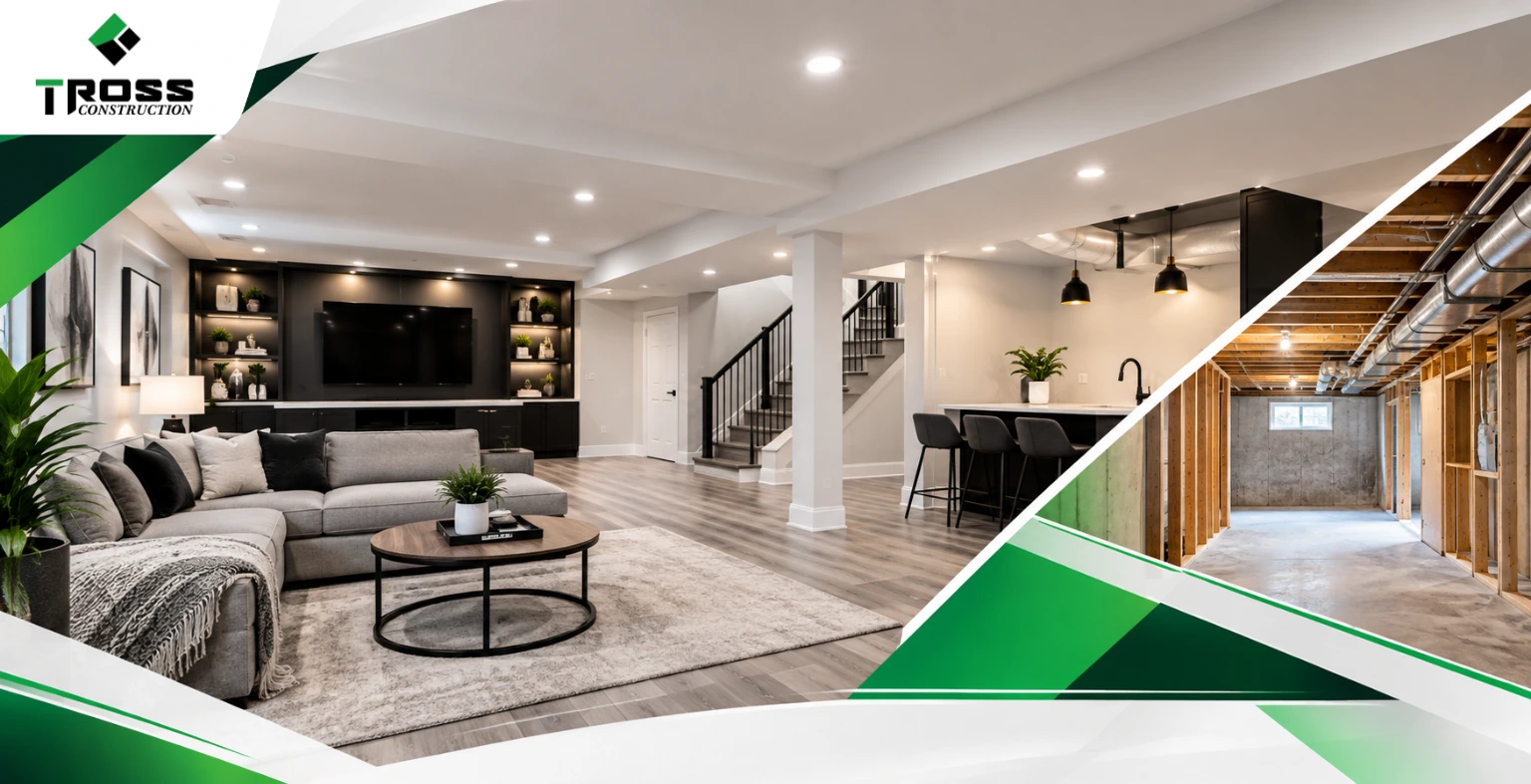
Basement contracting means different things to different homeowners, and that’s exactly where a lot of confusion (and budget surprises) comes from. For some Montreal homeowners, it means finishing an unused basement into a livable space. For others, it means fixing structural cracks, dealing with moisture, or bringing an older basement up to code before selling. At Tross Construction, we get calls for all of the above, often within the same week.
This guide breaks down exactly what basement contracting services typically include in Montreal, what drives the cost up or down, and how to know which service your home actually needs before you get quotes.
What Does “Basement Contracting” Actually Cover?
Basement contracting is an umbrella term, and a proper contractor should be able to handle or coordinate all of the following under one project:
- Structural assessment and repair — foundation cracks, settling, load-bearing wall changes
- Waterproofing — interior or exterior, French drains, sump pump installation
- Framing and insulation — turning a raw concrete shell into a proper room
- Electrical and plumbing rough-in — for basements adding a bathroom, kitchenette, or bedroom
- Drywall, flooring, and finishing — the visible, livable-space work
- Egress windows — required by code if you’re adding a bedroom
- Permits and code compliance — a step many DIY and unlicensed contractors skip, which causes problems later at resale
A homeowner rarely needs every item on this list. The first job of a good contractor is figuring out which of these your basement actually requires, not upselling you on all of it.
The Three Most Common Basement Projects in Montreal
1. Basement Finishing (Unfinished → Livable Space)
This is the most requested service we see across Montreal, especially in homes built in the 1960s–1980s with large, unused basement footprints. It typically includes framing, insulation, electrical, drywall, flooring, and sometimes a bathroom or laundry area.
2. Waterproofing & Moisture Repair
Montreal’s clay soil, high water table in certain boroughs, and freeze-thaw winters make this one of the most common basement issues in the city. This can mean interior drainage systems, exterior membrane waterproofing, crack injection, or sump pump installation, often a combination of two or more.
3. Renovation of an Existing Finished Basement
Older finished basements (especially pre-2000 builds) often need to be gutted and redone outdated wood paneling removed, moisture issues behind walls addressed, and layouts modernized to fit today’s needs like a home office or rental unit.
Average Cost of Basement Contracting Services in Montreal
Costs vary significantly depending on scope, but here’s a realistic breakdown based on projects Tross Construction has been handled across Montreal:
| Service | Typical Cost Range (CAD) |
|---|---|
| Basic basement finishing (framing, insulation, drywall) | $30 – $50 / sq ft |
| Basement finishing with bathroom addition | $45,000 – $75,000 (avg. 800–1,000 sq ft) |
| Interior waterproofing (drainage system + sump pump) | $3,500 – $8,000 |
| Exterior waterproofing (full excavation + membrane) | $8,000 – $18,000+ |
| Foundation crack repair (injection) | $500 – $1,500 per crack |
| Egress window installation | $2,500 – $5,000 per window |
| Full basement renovation (gut + rebuild) | $40,000 – $90,000+ |
A few factors that move these numbers: ceiling height (low ceilings often mean extra excavation to meet code), whether plumbing needs to be added from scratch, the condition of your foundation walls, and how much of the existing space needs to be demolished before rebuilding starts.
We always start with a free on-site assessment, because two basements that look similar on the surface can have very different costs once we see what’s behind the walls or under the floor.
The Basement Contracting Process: What to Expect
1. Initial consultation and assessment. We walk through your basement, discuss your goals (extra bedroom, rental unit, home gym, or home office), and check for existing moisture or structural issues that need addressing before finishing work starts.
2. Scope and quote. You get an itemized breakdown, not a vague lump sum, so you know exactly what you’re paying for at each stage.
3. Permits. For any basement adding a bedroom, bathroom, or separate living unit, permits are required by the borough. Tross Construction handles this process so you’re not stuck navigating city paperwork alone.
4. Waterproofing first, always. If there’s any sign of moisture, we address it before framing begins. Finishing over an unresolved water issue is the single most common and most expensive mistake we see homeowners make when they’ve hired the wrong contractor.
5. Framing, electrical, and plumbing rough-in. Walls go up, wiring and pipes are run, and everything is inspected before it’s closed up behind drywall.
6. Insulation and drywall. Proper basement insulation matters more in Montreal than most other regions because of how cold foundation walls get in winter; skipping this step leads to condensation issues down the line.
7. Flooring and finishing touches. Flooring, trim, paint, and fixtures complete the space.
8. Final walkthrough and inspection. We confirm everything meets code and walk you through the finished space before calling the job done.
A standard basement finishing project takes 4–8 weeks depending on size and scope. Waterproofing-only projects are usually completed in 3–7 days.
Signs You Need Waterproofing Before Finishing
If you’re planning to finish your basement, don’t skip this step. Watch for:
- Musty odors that persist regardless of cleaning
- Visible efflorescence (white mineral deposits) on foundation walls
- Cracks in the foundation, especially horizontal ones
- Peeling paint or bubbling on basement walls
- A sump pit with no pump, or an old, unreliable pump
Finishing over any of these without addressing the root cause almost always leads to mold, warped flooring, and costly rework within a few years.
How to Choose a Basement Contractor in Montreal
A few questions worth asking before signing with anyone:
- Do they handle structural, waterproofing, and finishing work in-house, or subcontract everything piecemeal?
- Will they pull the required permits, or leave that to you?
- Do they inspect for moisture issues before quoting the finishing work?
- Do they provide a detailed, itemized quote rather than a rough estimate?
- Do they offer a workmanship warranty on completed work?
Why Montreal Homeowners Choose Tross Construction
Tross Construction handles basement projects across Montreal from start to finish, including structural repair, waterproofing, framing, electrical and plumbing coordination, and final finishing without passing you between multiple subcontractors. We assess every basement for moisture and structural issues before quoting finishing work, because we’d rather flag a problem upfront than have you deal with it after the drywall is up. Every project comes with a clear, itemized quote and a workmanship warranty.
Frequently Asked Questions
Do I need a permit to finish my basement in Montreal?
Yes, if you’re adding a bedroom, bathroom, or separate living space, a permit is typically required. Basic cosmetic finishing without adding rooms may not need one, but requirements vary by borough. Tross Construction confirms this before work begins.
How long does a basement renovation take?
Standard finishing projects run 4–8 weeks. Waterproofing-only work is usually done in under a week. Full gut-and-rebuild renovations can take 8–12 weeks depending on scope.
Should I waterproof before or after finishing my basement?
Always before. Finishing over an unresolved moisture issue leads to mold and structural damage that costs far more to fix later.
Can I add a bedroom or rental unit in my basement?
Often yes, provided you meet ceiling height, egress window, and fire separation requirements under Quebec’s building code. Tross Construction can assess whether your basement qualifies.
What’s the difference between interior and exterior waterproofing?
Interior waterproofing manages water once it enters (drainage systems, sump pumps). Exterior waterproofing stops water before it reaches your foundation walls (membranes, excavation). Many Montreal homes benefit from a combination of both.