
Quebec winters are long, cold, and unforgiving. While most homeowners focus on windows, doors, and attics, the basement is often the most overlooked part of the home. Yet it is surrounded by cold soil and concrete, which makes it one of the biggest sources of heat loss when temperatures drop well below zero.
If your lower level always feels chilly, your heating bills keep creeping up, or you notice damp patches on the walls, your insulation may not be doing its job. This guide explains why basement insulation matters in Quebec, the clear warning signs to watch for, and what your options are before the deep freeze arrives.
Why Basement Insulation Is Important During a Quebec Winter
A basement is not just extra storage space. For many Quebec families it is a family room, home office, gym, or rental suite. Keeping it warm, dry, and energy efficient is essential, and that starts with proper insulation.
How Cold Temperatures Affect Your Basement
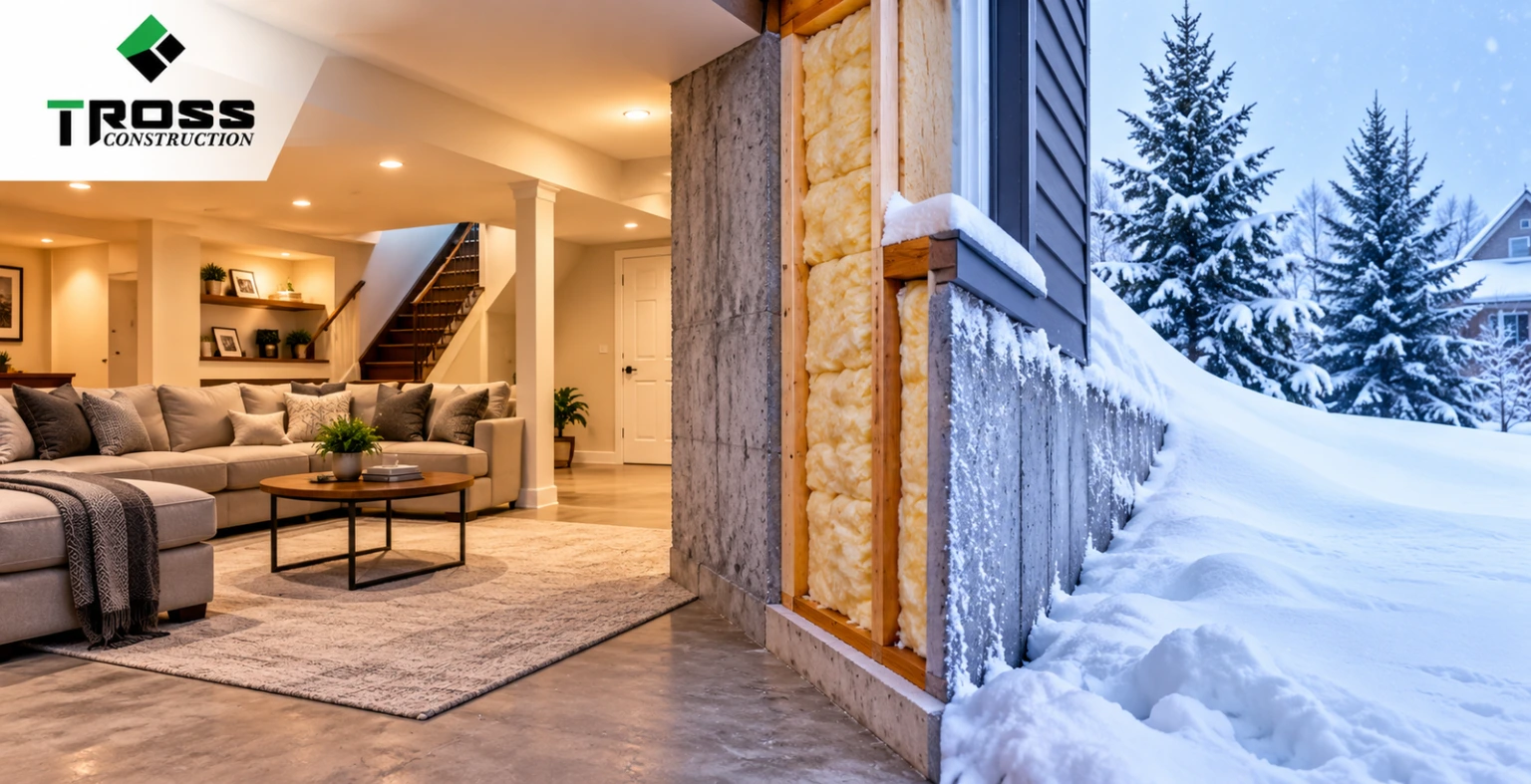
When the ground freezes, cold travels through concrete foundation walls and slab floors into your living space. Concrete is a poor insulator, so without a thermal barrier the walls take on the temperature of the surrounding soil. Warm indoor air meets those cold surfaces, loses heat quickly, and can form condensation. Over a Quebec winter, with weeks of extreme cold and repeated freeze-thaw cycles, this steady heat loss adds up.
Benefits of Proper Basement Insulation
A well-insulated basement offers advantages that go far beyond comfort:
- Lower heating costs, because less heat escapes through the foundation
- More even temperatures from the basement to the upper floors
- Reduced risk of condensation and the mold that can follow
- A more usable living space all year round
- Better long-term protection for finishes, flooring, and stored belongings
7 Signs Your Basement Needs Better Insulation
Not sure whether your basement is up to the challenge? These seven signs are common indicators that your insulation is missing, damaged, or simply not enough.
1. Your Basement Feels Cold Even When the Heating Is On
If the basement stays chilly no matter how high you turn up the thermostat, heat is escaping as fast as it arrives. This is one of the most common signs of inadequate insulation, particularly in older homes where foundation walls were left bare.
2. Your Energy Bills Are Increasing
A steady rise in heating costs, with no change in your habits or electricity rates, can point to hidden heat loss. When your heating system has to work harder to compensate for a cold foundation, it uses more energy and wears out faster.
3. Your Basement Walls Feel Cold to the Touch
Place your hand on an exterior basement wall in January. If it feels icy, the wall is not being buffered from the outdoor cold. Properly insulated walls feel noticeably closer to room temperature.
4. You Notice Drafts or Uneven Temperatures
Drafts near the rim joist (where the foundation meets the wood framing), around windows or along the base of walls suggest air leakage and gaps in the thermal envelope. If one corner of the basement is much colder than another, insulation is likely missing or poorly installed in that area.
5. Your Floors Above the Basement Feel Cold
Cold floors on the main level are often blamed on the flooring itself, but heat loss from below plays a big part. When the basement is cold, the floor above it loses warmth too, leaving you reaching for slippers all winter.
6. Condensation or Moisture Appears on Basement Walls
Droplets, damp patches, or a musty smell can show that warm, humid air is hitting cold concrete. Insulation helps keep the wall surface warmer, which reduces condensation. Keep in mind that moisture can also come from leaks or poor drainage, which need to be dealt with separately.
7. Your Basement Is Difficult to Keep Comfortable
If you avoid using your basement in winter because it never feels pleasant, that is a sign worth acting on. A properly insulated space should hold a stable temperature with minimal extra heating.
What Happens If Your Basement Is Poorly Insulated During Winter?
Ignoring the signs can lead to problems that become more expensive to fix over time.
Heat Loss and Reduced Energy Efficiency
A significant share of a home’s heat can escape through an uninsulated foundation. This forces your furnace or heat pump to run longer, increasing your energy bills and putting extra strain on your equipment.
Cold Spots and Indoor Comfort Problems
Poor insulation creates cold zones, chilly floors, and temperature swings between levels. These comfort issues are not just annoying; they make part of your home hard to use during the months you need the space most.
Moisture and Condensation Concerns
When warm indoor air reaches a cold wall, moisture forms. Over time, persistent dampness can lead to mould, peeling paint, damaged finishes, and unpleasant odours. Addressing insulation (along with any moisture source) helps protect both your home and your indoor air quality.
Which Basement Insulation Options Work Best for Quebec Homes?
The right choice depends on your foundation, your moisture conditions, and your budget. These are the most common options.
Rigid Foam Insulation
Rigid foam boards, such as extruded or expanded polystyrene and polyisocyanurate, are a popular choice for basement walls. They offer good thermal performance, resist moisture better than many other materials, and can be installed directly against the foundation. Sealing the seams helps create an effective air and vapor barrier.
Spray Foam Insulation
Spray foam expands to fill gaps, cracks, and irregular surfaces, creating a continuous insulating and air-sealing layer. It is especially effective at the rim joist and on uneven foundation walls. It usually costs more than other options, but its performance and air-sealing ability make it a strong choice for Quebec’s harsh climate.
Fibreglass Insulation and Its Limitations
Fibreglass batts are affordable and widely used, but they are not ideal in basements. They can absorb moisture, lose effectiveness when damp, and allow air movement behind them if not installed perfectly. Fibreglass can work in some framed, well-protected assemblies, but on its own against a concrete wall it is generally not the best option for a basement.
Should You Insulate Basement Walls or the Ceiling?
Both approaches exist, but they serve different purposes.
When to Insulate Basement Walls
Insulating the walls is usually the best approach if you use the basement as living space or plan to finish it. It keeps the basement itself warmer, reduces condensation on the foundation, and improves comfort throughout the lower level.
When Basement Ceiling Insulation May Be Appropriate
Ceiling insulation can make sense for an unfinished basement that is used mainly for storage or mechanicals. It reduces heat loss to the basement and keeps the main floor warmer, but it leaves the basement cold and can expose pipes to freezing. If water lines run through the ceiling space, this option needs careful planning.
Can You Insulate Your Basement Before Winter?
Yes, in many cases it is possible to insulate before the cold sets in, provided the conditions are right. Starting early gives you time to deal with any surprises.
What to Check Before Starting an Insulation Project
Before any material goes up, inspect the following:
- Foundation walls for cracks, leaks, or efflorescence (white mineral deposits)
- Signs of past or current water infiltration
- The rim joist area and any air leaks
- Ventilation and humidity levels
- Location of pipes, electrical lines, and the electrical panel
Why Moisture and Foundation Issues Should Be Addressed First
Insulating over a wet or cracked foundation can trap moisture behind the insulation, hiding the problem and allowing mould or rot to develop. Repair leaks, improve exterior drainage, and fix visible cracks first. Once the basement is dry and stable, insulation will perform properly and last.
DIY Basement Insulation vs. Professional Installation
When a DIY Approach May Be Suitable
A DIY project can be reasonable for a small, dry basement with simple walls and no moisture concerns. Rigid foam boards, for example, are manageable for confident homeowners with the right tools. Even then, careful air sealing and attention to building code requirements are important.
Benefits of Hiring a Basement Insulation Contractor in Quebec
A professional contractor brings experience with local climate demands, building codes, and moisture control. Benefits include:
- Proper assessment of moisture and foundation conditions
- Correct material selection and installation for your home
- Air sealing at hard-to-reach areas like the rim joist
- Fire safety and code compliance
- Faster completion and often a more durable result
For larger basements, older homes, or any space with a moisture history, professional installation is usually the safer investment.
How Much Does Basement Insulation Cost in Quebec?
Costs vary widely from one project to the next, so the most reliable way to know your price is to request a quote after an on-site inspection.
Factors That Affect Installation Costs
- Type of insulation chosen
- Condition of the walls and any repairs needed beforehand
- Accessibility and layout of the basement
- Required R-value and wall assembly
- Labor and local contractor rates
- Whether finishing work, such as framing and drywall, is included
How Basement Size and Insulation Type Affect Your Budget
A larger basement means more material and labor. Spray foam typically costs more per square foot than rigid foam or fiberglass, but it can reduce the need for additional air-sealing steps. Ask for a detailed quote that compares options so you can balance upfront cost against long-term energy savings. It is also worth checking whether any provincial or federal energy efficiency programs are currently available for your project.
Frequently Asked Questions About Basement Insulation
What Is the Best Insulation for a Basement in Quebec?
Rigid foam and spray foam are generally the top choices because they resist moisture and provide strong air sealing. The best option for your home depends on your foundation, moisture conditions and budget, so an inspection is recommended.
How Much R-Value Does Basement Insulation Need?
Requirements depend on your home, local building codes and how the basement is used. In cold climates like Quebec’s, higher R-values are recommended for basement walls than in milder regions. A qualified contractor can confirm the right level for your project.
Can Basement Insulation Help Reduce Heating Costs?
Yes. By reducing heat loss through the foundation, insulation lowers the workload on your heating system, which can translate into noticeable savings over the winter months.
Should I Fix Basement Moisture Problems Before Insulating?
Absolutely. Moisture should always be addressed first. Insulating over leaks, dampness or foundation cracks can trap water and lead to mould and material damage.
When Is the Best Time to Insulate a Basement?
The best time is before winter, typically in late summer or early fall, when conditions are drier and contractors have more availability. That said, interior insulation can be installed year-round, so if you notice the warning signs in the middle of winter, it is still worth acting.
Get Your Basement Ready for the Cold
A cold, damp or drafty basement is more than an inconvenience. It affects your comfort, your energy bills and the health of your home. If you recognize any of the signs above, schedule a professional inspection to find out what your basement needs before the next cold snap arrives.