
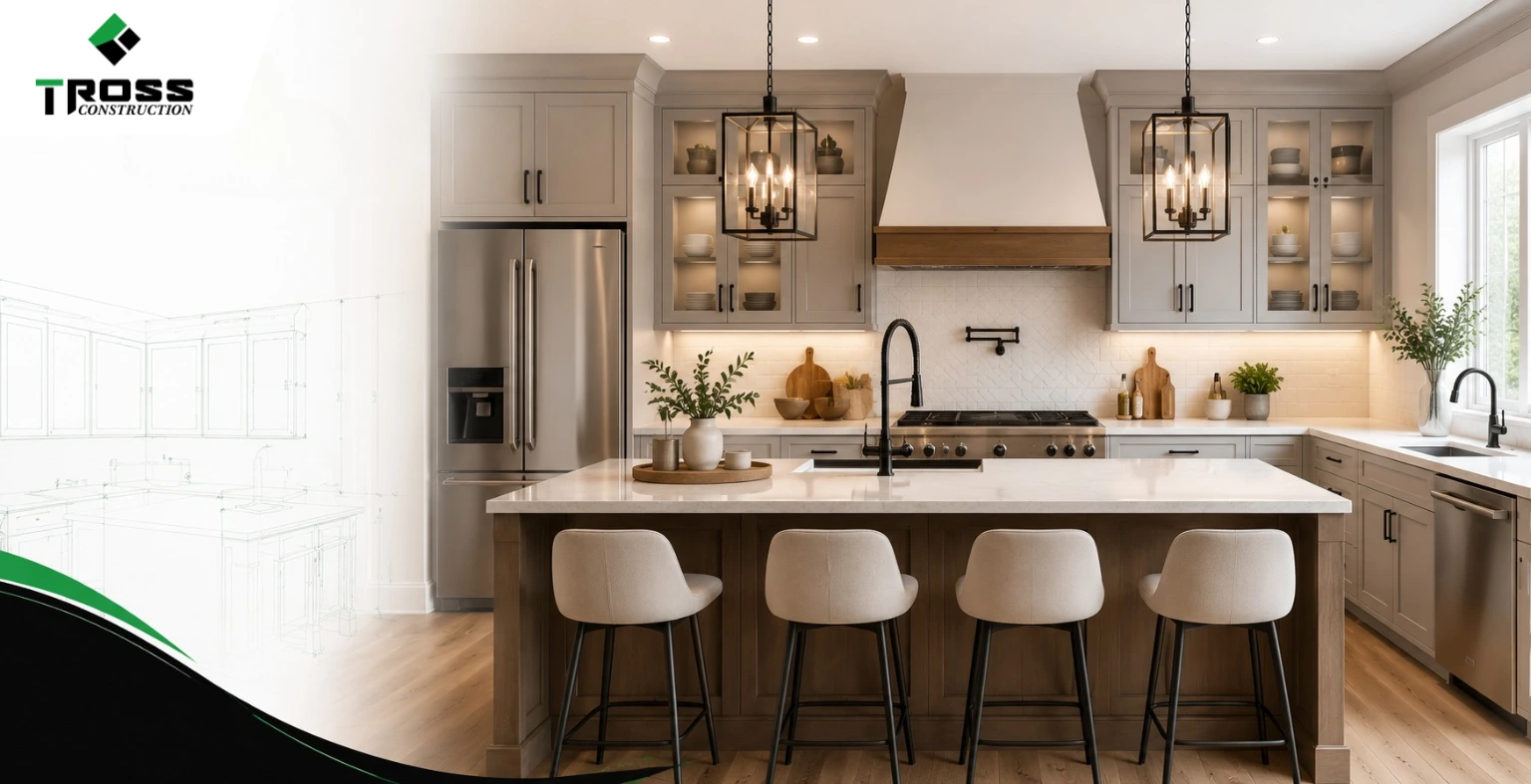
This guide helps you navigate the exciting process of selecting custom kitchen cabinets in Montreal. You will discover how to match designs to your home’s aesthetic, ensuring both beauty and practicality. Your kitchen, a central hub, deserves cabinetry that reflects your unique taste and meets your specific needs.
Assessing Your Kitchen Layout and Space Requirements
Understanding the physical parameters of your kitchen represents the foundational step in any custom cabinet project. Before considering aesthetics or materials, you must accurately gauge the available space and how it currently functions, or perhaps malfunctions. This initial assessment directly informs the potential for new layouts, the scale of cabinetry that can be accommodated, and ultimately, the overall efficiency of your redesigned culinary environment.
Measuring your square footage for optimal cabinet placement
Accurately measuring your kitchen’s dimensions provides the crucial data for cabinet planning. Carefully record wall lengths, ceiling height, and the positions of windows and doors. This detailed spatial understanding ensures your custom cabinets will fit precisely without impeding movement or natural light.
Evaluating the workflow and “Golden Triangle” efficiency factors
Examining your current kitchen’s workflow reveals areas for improvement in daily use. The “Golden Triangle” concept, connecting the sink, refrigerator, and stove, offers a proven framework for optimizing efficiency. You want clear paths between these critical zones.
Optimizing this workflow means minimizing steps between primary workstations. For example, a well-designed kitchen ensures that retrieving ingredients from the refrigerator, washing them at the sink, and then moving to the stove for cooking feels intuitive and unencumbered. Consider how multiple users might operate simultaneously without collision or congestion.
- Are there clear, unobstructed pathways between the refrigerator, sink, and stove?
- Does the placement of appliances and countertops support a logical progression from food preparation to cooking?
- Can you easily access frequently used items without excessive bending or stretching?
- Perceiving potential bottlenecks now prevents frustration later.
Key Factors to Consider When Selecting Materials and Finishes
Selecting the appropriate materials and finishes for your custom kitchen cabinets impacts both their aesthetic appeal and long-term durability. Consider how daily use will affect surfaces, particularly in high-traffic zones, and factor in your lifestyle to ensure choices withstand the demands of a busy household. The longevity of your investment hinges on making informed decisions at this stage, preventing premature wear or dissatisfaction. Your budget plays a significant role in material selection, as prices can vary widely between different wood species, laminates, and composite options. Maintenance requirements also differ, with some finishes demanding more regular cleaning or specific care products than others.
Think about the overall design vision for your kitchen; modern aesthetics often pair well with sleek, minimalist finishes, while traditional styles might call for richer wood grains and classic hardware. Consider the overall aesthetic you wish to achieve in your kitchen. Evaluate the durability and longevity of each material option. Factor in your household’s daily activity level and potential wear and tear. Assess the maintenance requirements associated with different finishes. You must also account for the impact of Montreal’s climate on material choices.
Comparing solid wood, high-density fiberboard, and premium plywood
Each material offers distinct advantages for custom cabinetry. Solid wood provides timeless beauty and can be refinished multiple times, while high-density fiberboard (HDF) offers exceptional smoothness for painted finishes and remarkable stability. Premium plywood, known for its strength-to-weight ratio, resists warping and provides a stable substrate for veneers. Material Comparison for Custom Cabinets
| Material Type | Key Characteristics |
|---|---|
| Solid Wood | Natural grain, refinishable, and a wide range of species (e.g., maple, oak, cherry). |
| High-Density Fiberboard (HDF) | Smooth surface, excellent for paint, uniform density, very stable. |
| Premium Plywood | Strong, stable, and resistant to warping; good for veneers and laminates. |
Tips for choosing moisture-resistant finishes suitable for the Montreal climate
The fluctuating humidity and cold temperatures in Montreal necessitate finishes that can withstand significant environmental stress. Selecting materials with inherent moisture resistance or applying specialized coatings will protect your cabinetry from warping, cracking, or delamination. Investing in these protective measures safeguards your custom cabinets for years to come. Opt for finishes with high resistance to humidity and temperature changes. Consider sealed or encapsulated materials to prevent moisture absorption. Choose paints or lacquers specifically formulated for kitchen environments. This approach ensures your cabinets remain pristine despite environmental challenges. Beyond the initial application, proper sealing and edge banding are critical components of moisture resistance.
Cabinets in Montreal’s climate benefit greatly from finishes that create a barrier against ambient moisture, preventing it from penetrating the core material. For instance, a high-quality polyurethane or conversion varnish offers superior protection compared to standard paints, guarding against swelling or delamination, particularly around sinks and dishwashers. Ensure all exposed edges are properly sealed to prevent moisture ingress. Inquire about the volatile organic compound (VOC) content of finishes. Consider finishes with antimicrobial properties for added hygiene. This proactive selection protects against the specific environmental challenges of Montreal.
How to Choose a Style That Complements Your Home’s Architecture
Distinguishing between contemporary, shaker, and traditional designs
Understanding the core differences between cabinet styles is key. Contemporary designs feature clean lines and minimal ornamentation, while Shaker cabinets offer a timeless, five-piece door with a recessed panel. Traditional designs often incorporate raised panels, decorative moldings, and intricate detailing.
Selecting color palettes that enhance natural lighting in smaller spaces
Light color palettes can significantly impact the perception of space. Opting for whites, creams, or pale greys reflects available light, making a compact kitchen feel more open and airy. These lighter hues prevent the space from feeling enclosed or visually heavy.
Consider how different shades interact with both natural and artificial light sources throughout the day. A high-gloss finish on lighter cabinet doors can further amplify light reflection, dispersing brightness across the room. For instance, a soft off-white with a subtle warm undertone can create an inviting atmosphere even in a north-facing kitchen with limited direct sunlight.
Maximizing Functionality with Smart Storage Solutions
How to integrate pull-out pantries and customized corner organizers
Pull-out pantries offer full visibility and access to contents, eliminating lost items at the back of shelves. You can configure corner organizers, such as kidney-shaped or LeMans pull-outs, to utilize otherwise dead space efficiently, making every inch of your Montreal kitchen functional.
Selecting ergonomic hardware and high-durability soft-close mechanisms
Choosing the right hardware significantly impacts daily kitchen use. You will appreciate ergonomic handles and pulls, designed for comfort and ease of grip, especially for frequently accessed cabinets. Soft-close mechanisms, applied to both doors and drawers, prevent slamming, reducing wear and tear on your custom cabinetry while also minimizing noise in your home. These high-durability components often feature advanced dampening systems, ensuring a gentle and controlled closure every time. Consider hardware finishes that complement your chosen cabinet style, from brushed nickel to matte black, ensuring aesthetic consistency throughout your kitchen design.
The Professional Design Process with Tross Construction
Navigating the initial consultation and conceptualization phase
Your journey begins with an in-depth discussion, where Tross Construction‘s designers listen to your vision, lifestyle, and aesthetic preferences. They will assess your current kitchen space, taking precise measurements and noting architectural details to inform the initial concepts.
Reviewing 3D renderings and custom material selections
Visualizing your new kitchen becomes effortless with detailed 3D renderings. You will explore various layouts, finishes, and hardware options, allowing for informed decisions before any physical work begins. These photorealistic visualizations provide a comprehensive preview of your custom cabinets within the context of your home, ensuring every angle and detail aligns with your expectations. You can experiment with different wood species, stain colors, countertop materials, and hardware styles, seeing the impact of each choice on the overall design. This iterative process allows for refinements, guaranteeing the final design perfectly captures your desired aesthetic and functionality, perhaps incorporating a specific grain pattern on an oak island or a particular shade of matte black for handle pulls.
What to expect during the precision installation stage
The installation phase is executed with meticulous attention to detail, minimizing disruption to your home. Skilled craftsmen ensure every cabinet is perfectly aligned, level, and securely fitted according to the approved designs. Each component, from base cabinets to crown molding, is handled with care and installed by experienced professionals who specialize in custom millwork. They manage all aspects of the fitting, including scribing panels to imperfect walls for a truly built-in appearance and integrating appliances seamlessly. This dedicated approach guarantees a flawless finish and long-lasting durability, often involving specialized tools to achieve precise cuts around existing architectural features like window frames or ventilation systems.
Budgeting and Timeline Factors for Custom Kitchen Cabinets Montreal
Establishing a clear budget before you begin the custom cabinet process is paramount. Custom cabinetry, by its nature, represents a significant investment in your home, reflecting the personalized design, quality materials, and expert craftsmanship involved. You should consider not only the cost of the cabinets themselves but also potential expenses for demolition, installation, hardware, and any necessary plumbing or electrical modifications. A comprehensive budget helps define the scope of your project, ensuring that your aspirations align with your financial capacity, allowing for informed decisions on materials and features.
Understanding the various components that contribute to the overall cost will help you allocate funds effectively. Material selection plays a substantial role, with exotic woods, specialized laminates, or high-gloss finishes often commanding higher prices than standard options. The complexity of your chosen design, including intricate moldings, custom sizing for unique spaces, or specialized storage accessories, will also influence the final figure. Labor costs, reflecting the skill of the artisans and installers, are another key element in the total investment for your Montreal kitchen.
Understanding the primary cost drivers of bespoke cabinetry
Several elements dictate the final price of bespoke cabinetry. Material choices, such as solid wood versus engineered options, significantly impact cost. The complexity of the design, including custom sizes, unique angles, or integrated features, also adds to the expense. Finally, the chosen hardware and finishes, from basic to premium, contribute to the overall investment.
Tips for managing your renovation schedule effectively
Effective project management is crucial for a smooth renovation. You should aim for clear communication with your cabinet maker, establishing realistic expectations for each phase. Detailed planning, including material selection and design finalization, should occur before any work begins. Anticipating potential delays, such as material lead times, helps maintain momentum.
Managing the timeline for your custom kitchen cabinet project requires proactive planning and clear communication with your chosen Montreal cabinet maker. Initial design consultations and material selection can take several weeks, depending on the complexity and your decision-making process. Fabrication of custom cabinets is a time-intensive process, often requiring 8 to 12 weeks, as each piece is meticulously crafted to your specifications. Installation, while quicker than fabrication, still demands careful scheduling to minimize disruption to your home.
- Plan for design finalization to take longer than anticipated.
- Confirm lead times for all selected materials and hardware early in the process.
- Schedule installation at a time that minimizes disruption to your daily routine.
- Maintain open and regular communication with your cabinet maker regarding progress and potential adjustments.
Recognizing that unforeseen circumstances, such as material delivery delays or unexpected structural discoveries during demolition, can impact the schedule allows for greater flexibility and reduces stress throughout the renovation.
Final Words
You can create a kitchen that perfectly reflects your personal style and meets your functional needs. Considering your lifestyle, home’s architecture, and working with experienced professionals ensures a space that is both beautiful and highly efficient for daily use.
FAQ
Q: What are the primary advantages of choosing custom kitchen cabinets over stock options in Montreal?
A: Custom kitchen cabinets offer unparalleled personalization, allowing homeowners to tailor every aspect from dimensions to finishes to perfectly suit their space and aesthetic preferences.
Q: How does the design process for custom cabinets typically begin with a Montreal-based company?
A: The initial stage usually involves a comprehensive consultation, often at the client’s home, where a designer assesses the existing kitchen layout and discusses functional needs and aesthetic desires.
Q: Which materials are popular for custom kitchen cabinets in Montreal, and what are their characteristics?
A: Several materials are favored for custom kitchen cabinets, each offering distinct advantages. Solid wood, such as maple or oak, remains a classic choice for its durability and natural beauty, lending itself well to both traditional and contemporary designs.
Q: Can custom cabinets incorporate specialized storage solutions for improved organization?
A: Custom cabinets excel at integrating highly functional storage solutions tailored to a household’s specific needs, significantly improving kitchen organization.
Q: What is the typical timeline for designing, fabricating, and installing custom kitchen cabinets in Montreal?
Custom kitchen cabinets in Montreal typically take 6–10 weeks from initial design to final installation, depending on the project’s complexity, materials, and customization requirements.