
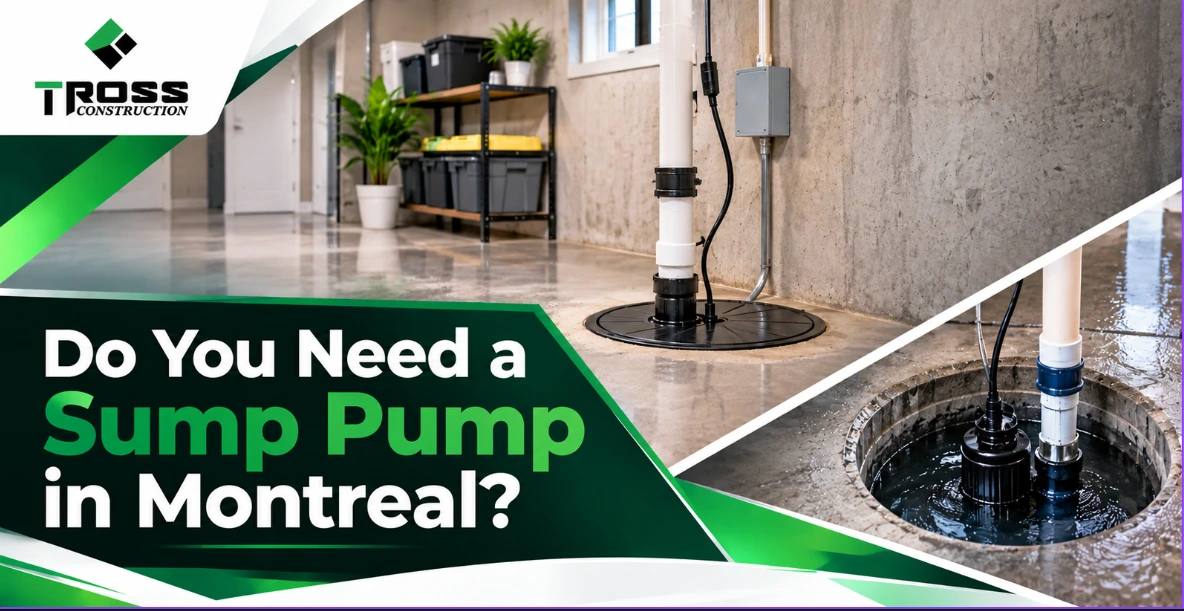
Every spring, thousands of Montreal homeowners wake up to the same nightmare: water creeping across the basement floor. Between heavy snowmelt, sudden downpours, and older homes with aging drainage systems, basements across the island are under constant pressure.
So, do you need a sump pump in Montreal? If your home has a basement or crawl space, the answer is very often yes. A properly installed sump pump is one of the most affordable ways to protect your foundation, your belongings, and your family’s health.
At Tross Construction, we have seen the damage that water can do, from ruined flooring and mold growth to costly structural repairs. In this guide, we walk you through the 7 clearest signs your basement is at risk, so you can act before the next flood.
Why Montreal Basements Are Especially Vulnerable
Montreal’s climate and geography create a perfect storm for basement water problems:
- Spring thaw: Heavy snow melts quickly, saturating the ground around your foundation.
- High water table: Many neighborhoods, including areas of the West Island, Verdun, and Laval, sit on soil that holds water close to the surface.
- Heavy rainstorms: Intense rainfall can overwhelm municipal sewers and soil drainage.
- Older housing stock: Many homes have aged weeping tile (foundation drains) that clog, crack, or collapse over time.
- Freeze-thaw cycles: Repeated freezing and thawing widens foundation cracks and lets in more water.
A sump pump collects groundwater in a pit and pumps it safely away from your home before it reaches your living space.
Sign #1: You Have Had Water in Your Basement Before
If your basement has flooded once, it will likely happen again. Past flooding, even minor, shows that water is finding its way to your foundation. Without a sump pump, you are relying on luck every time it rains or the snow melts.
What to look for: Water stains on walls or floors, tide marks on stored boxes, or a history of wet carpets and damaged drywall.
Sign #2: Your Basement Smells Musty or Damp
A persistent musty smell is one of the earliest signs of excess moisture. Even if you do not see standing water, humidity from wet soil can seep through concrete walls and floors, creating the conditions mold loves.
What to look for: A damp odor that gets worse after rain, condensation on walls or windows, or a basement that feels clammy even with a dehumidifier running.
Sign #3: You See Mould, Mildew, or Peeling Paint
Visible mold is a red flag. Black, green, or white patches on walls, baseboards, or stored items mean moisture is regularly present. Peeling paint, bubbling drywall, and white chalky deposits (called efflorescence) on concrete also point to water pushing through your foundation.
Why it matters: Mould can affect indoor air quality and may aggravate allergies and respiratory issues. Fixing the source of moisture, not just cleaning the surface, is essential.
Sign #4: Your Home Sits on Low Ground or Near a High Water Table
Is your property at the bottom of a slope? Does water pool in your yard after rain? If so, groundwater naturally flows toward your foundation. Homes built on low-lying land or in areas with a high water table benefit greatly from a sump pump, because the water has nowhere else to go.
What to look for: Standing water in the yard, soggy lawn areas near the foundation, or neighbors who have had similar problems.
Sign #5: You Notice Cracks in Your Foundation or Basement Floor
Small cracks are common in concrete, but they can become entry points for water, especially during spring thaw. Cracks that leak, widen, or appear after heavy rain suggest hydrostatic pressure (water pushing against your foundation from the outside).
What to look for: Hairline or wider cracks in walls and floors, damp spots along cracks, or water seeping in where the wall meets the floor.
Important: Structural cracks should always be assessed by a professional. A sump pump helps relieve the water pressure that makes them worse.
Sign #6: You Have a Finished Basement or Valuable Items Downstairs
Even if your basement has never flooded, the cost of being wrong is high. Finished basements with flooring, drywall, electronics, and furniture can suffer thousands of dollars in damage from a single event, and not every insurance policy covers it.
If you use your basement as a bedroom, home office, rental unit, or storage space, a sump pump is an inexpensive form of protection compared with the cost of repairs.
Sign #7: Your Existing Sump Pump Is Old, Noisy, or Failing
Already have a sump pump? It will not last forever. Most pumps wear out and need replacing as they age, and a pump that fails during a storm is no protection at all.
Warning signs of a failing pump:
- Strange grinding, rattling, or humming noises
- Running constantly or short-cycling (turning on and off rapidly)
- Visible rust or corrosion
- No battery backup for power outages
- Not clearing the pit after heavy rain
If your pump is more than 7 to 10 years old, have it inspected before the next thaw.
What Happens If You Ignore These Signs?
Putting off a sump pump installation can cost far more in the long run:
- Flooded basements and ruined belongings
- Mould remediation
- Foundation damage and costly structural repairs
- Lower property value and difficulty selling your home
- Insurance claims that may be denied or limited
Preventing the problem is nearly always cheaper than fixing the damage.
Why Choose Tross Construction for Sump Pump Installation in Montreal?
Choosing the right installer matters as much as choosing the right pump. When you work with Tross Construction, you get:
- Local expertise: We understand Montreal’s soil, climate, and building conditions.
- Proper assessment: We inspect your basement, drainage, and foundation before recommending a solution.
- Quality equipment: We install reliable pumps and, where needed, battery backup systems.
- Clean, professional installation: Done right the first time, with minimal disruption to your home.
- Clear, upfront quotes: No hidden fees and no pressure.
Whether you need a brand-new installation or a replacement for an aging pump, our team is ready to help.
Get Your Free Sump Pump Quote in Montreal
Do not wait for the next storm to find out your basement is at risk. Contact Tross Construction today for a free, no-obligation assessment and a clear quote.
📞 Call us: [4389208647]
📧 Email: [contact@trossconstruction.ca]
Frequently Asked Questions (FAQs)
1. Do I need a sump pump in Montreal?
In most cases, yes. If your basement has ever been damp or flooded, your home sits on low ground, or you have a finished basement, a sump pump is strongly recommended. Montreal’s spring thaw, heavy rains, and high water table make basement flooding a common risk. A professional inspection can confirm whether your home needs one.
2. How much does sump pump installation cost in Montreal?
The cost depends on factors such as the type of pump, whether a sump pit already exists, the amount of concrete work required, discharge line routing, and whether you add a battery backup. Contact Tross Construction for a free, customized quote based on your home.
3. How long does a sump pump last?
Most sump pumps last roughly 7 to 10 years, depending on usage, water conditions, and maintenance. If yours is approaching that age or showing signs of trouble, it is wise to have it checked or replaced before spring.
4. Does home insurance cover sump pump failure in Quebec?
Coverage varies by insurer and policy. Water damage from sump pump failure or sewer backup is often excluded unless you have specific endorsements. Review your policy with your insurance provider, and ask about the coverage options available to you.
5. Should I get a battery backup sump pump?
Yes, in most cases. Heavy storms often cause power outages, which is exactly when your pump is needed most. A battery backup keeps your system running when the electricity goes out, giving you far more reliable protection.