
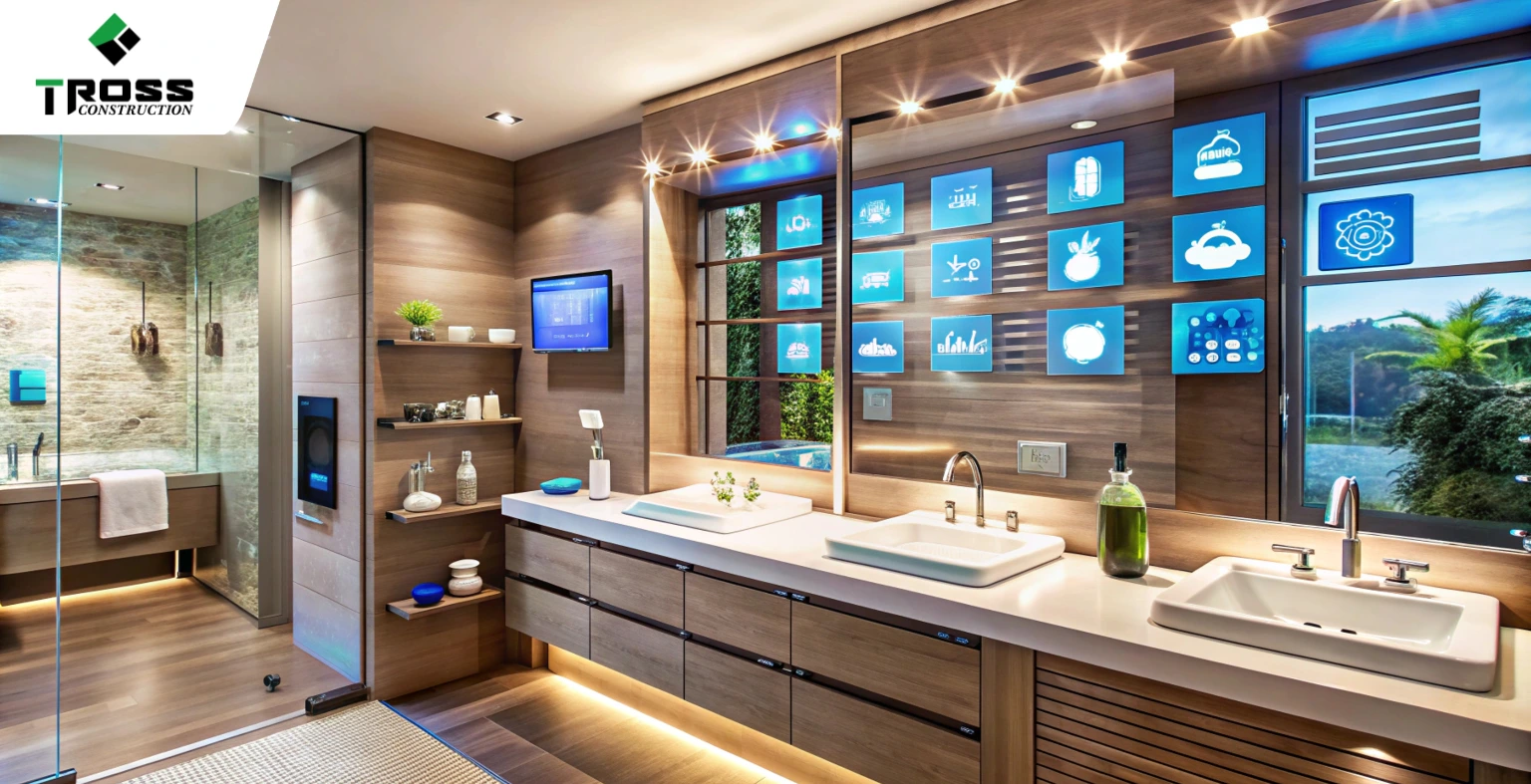
If you live in one of Montréal’s classic triplexes, a Plateau walk-up, or a downtown condo, chances are your bathroom wasn’t built with extra square footage in mind. The good news? The right vanity style can completely change how spacious a small bathroom feels without knocking down a single wall. At Tross Construction, we’ve renovated hundreds of bathrooms across Montréal, and vanity selection is consistently the single biggest factor in how a compact bathroom looks and functions.
In this guide, we break down the best bathroom vanity styles for small bathrooms in Montréal, what to consider for our older housing stock and humid winters, and how much you can expect to invest in 2026.
Why Vanity Style Matters More in Small Bathrooms
In a large bathroom, a vanity is just one element among many. In a small bathroom the kind common in Montréal duplexes, triplexes, and older condo conversions, the vanity often defines the entire room. It affects:
- Visual space: A bulky vanity makes a 5×7 bathroom feel like a closet, while the right silhouette opens up the floor.
- Storage efficiency: Montréal homes rarely have linen closets, so your vanity often becomes the only bathroom storage.
- Moisture management: Québec winters mean humidity and condensation; vanity materials need to handle that without warping.
- Plumbing constraints: Century-old Montréal buildings often have plumbing in awkward spots, which limits vanity placement and size.
1. Floating (Wall-Mounted) Vanities
Floating vanities are, hands down, the most requested style for small Montréal bathrooms right now. Because the cabinet is mounted to the wall rather than sitting on the floor, you can see the tile underneath, which visually stretches the room and makes cleaning far easier a big plus in older homes where bathroom floors can be uneven.
Floating vanities work especially well in condo bathrooms and suites in the Plateau, Griffintown, and Ville-Marie, where every inch of floor space counts. Pair one with a wall-mounted faucet for an even cleaner look.
Tross Construction tip: In older buildings, we always confirm the wall structure can support a floating vanity before installation. Plaster-and-lath walls common in pre-1970s Montréal homes often need reinforcement first.
2. Corner Vanities
For truly tight bathrooms, think powder rooms under a staircase or a half-bath squeezed into a converted closet, both common in Montréal row houses, and a corner vanity makes use of space that would otherwise sit empty. Corner units typically hold a compact sink and a small cabinet, and they work well when paired with a corner-mounted mirror to keep sightlines open.
3. Slim Single-Sink Vanities with Vessel Sinks
A narrow vanity base topped with a vessel sink adds visual height and a modern focal point without eating into floor space. This style suits Montréal’s narrower bathrooms, where a standard 30–36 inch vanity would crowd the doorway or shower entrance. Vessel sinks also pair nicely with the exposed-brick-and-industrial aesthetic popular in Griffintown and Old Montréal loft conversions.
4. Open-Shelf Vanities
Instead of closed cabinet doors, an open-shelf vanity uses a simple frame with shelving underneath. This keeps the design light and airy, ideal for basement bathrooms or windowless powder rooms where a bulky cabinet can make the space feel closed in. It also gives you a spot for rolled towels and baskets, which helps compensate for the lack of built-in storage typical in older Montréal bathrooms.
5. Custom Vanities with Mirrored Storage
When floor space is tight but you still need storage, going vertical is the answer. A custom vanity paired with a recessed medicine cabinet or a full mirrored wall unit adds storage without adding footprint. This is one of our most popular combinations for Montréal apartment renovations, where tenants and owners alike need every centimetre to count.
6. Compact Two-in-One Vanity Combos
For very small ensuites, a combo unit vanity, sink, and integrated storage tower in one piece can be more efficient than assembling separate pieces. These work particularly well in condo developments across Montréal’s downtown core, where bathroom footprints are standardized and tight.
Choosing the Right Material for Montréal’s Climate
Montréal’s humid summers and dry, cold winters put real stress on bathroom cabinetry. When we spec vanities for clients, we generally recommend:
- Moisture-resistant plywood or marine-grade MDF over particleboard, which swells with humidity.
- Quartz or solid-surface countertops over natural stone that needs regular sealing.
- Soft-close hardware, which holds up better through seasonal humidity swings than standard hinges.
- Light or neutral finishes (white oak, matte white, warm greige) to keep small rooms feeling bright, especially in bathrooms without windows common in Montréal’s interior rowhouse layouts.
How Tross Construction Approaches Small Bathroom Renovations
Every small bathroom in Montréal has its own quirks: a soil stack in the wrong spot, a radiator that can’t move, a door that swings the wrong way. Our process starts with an on-site assessment so the vanity style we recommend actually fits your plumbing, framing, and budget, not just a showroom photo. We handle everything from permits (where required under the Régie du bâtiment du Québec) to plumbing relocation, tiling, and final vanity installation.
Estimated Vanity Installation Costs in Montréal (2026)
Pricing varies with materials, plumbing changes, and whether structural reinforcement is needed. Here’s a general range our Montréal clients can expect:
| Vanity Style | Typical Size | Installed Price Range (CAD) |
| Corner vanity | 18″–24″ | $900 – $1,800 |
| Slim vessel sink vanity | 24″–30″ | $1,200 – $2,400 |
| Floating (wall-mounted) vanity | 30″–48″ | $1,800 – $3,800 |
| Open-shelf vanity | 24″–36″ | $1,000 – $2,200 |
| Custom vanity + mirrored storage | 30″–48″ | $2,500 – $5,500 |
Prices include standard installation; plumbing relocation, electrical work, or wall reinforcement in older buildings are quoted separately after an on-site visit.
Final Thoughts
The best vanity style for a small Montréal bathroom depends on your layout, your building’s age, and how much storage you actually need day to day. Floating and slim vessel-sink vanities tend to work best for visual space, while custom mirrored-storage units solve the storage problem that most older Montréal homes share. Whatever direction you lean toward, getting an accurate on-site assessment before you buy is the difference between a vanity that transforms your bathroom and one that just barely fits.
Ready to plan your small bathroom renovation? Tross Construction offers free on-site consultations across Montréal and surrounding boroughs—reach out and we’ll help you choose a vanity style that fits your space, your plumbing, and your budget.
Frequently Asked Questions
1. What is the best vanity style for a very small Montréal bathroom (under 30 sq ft)?
For bathrooms under 30 square feet, a floating vanity or a corner vanity works best. Both keep the floor visually open, which is especially helpful in the narrow bathrooms common in Montréal triplexes and pre-war apartments.
2. Are floating vanities suitable for older Montréal homes with plaster walls?
Yes, but they need proper wall reinforcement first. Many pre-1970s Montréal homes have plaster-and-lath walls that can’t support a floating vanity without added blocking, which our team installs during the renovation.
3. How much does a small bathroom vanity installation cost in Montréal?
Installed pricing typically ranges from $900 to $5,500 depending on the vanity style, materials, and whether plumbing needs to be relocated. See the pricing table above for a breakdown by style.
4. What vanity materials hold up best to Montréal’s humid summers and dry winters?
Moisture-resistant plywood or marine-grade MDF, combined with a quartz or solid-surface countertop, generally performs best through Montréal’s seasonal humidity swings, compared to particleboard or natural stone that requires sealing.
5. Do I need a permit to replace a bathroom vanity in Montréal?
Simply swapping a vanity in place typically does not require a permit. However, moving plumbing, walls, or electrical outlets as part of the renovation may require permits under the Régie du bâtiment du Québec, which Tross Construction manages on your behalf.