
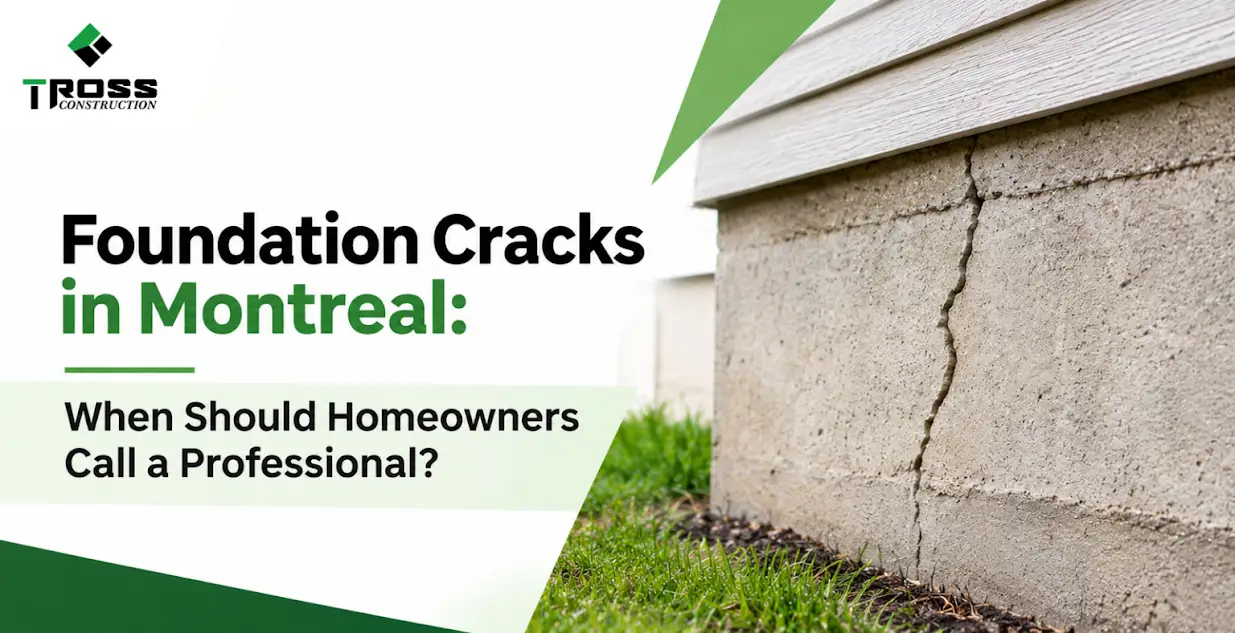
You’re in your basement foundation cracks and notice a crack in the wall that wasn’t there before. Is it normal, or is it a sign of a bigger problem?
If you own a home in Montreal, this is one of the most common worries you’ll face. Our freezing winters, heavy snow, spring thaws, and clay-rich soil put constant pressure on foundations. Many older homes, plexes, and triplexes across the island are also decades old, so some cracking is almost expected.
The good news is that not every crack is an emergency. The important thing is knowing the difference. In this guide, Tross Construction explains what causes foundation cracks in Montreal, which cracks you can monitor, and which ones mean it’s time to call a professional.
Why Do Foundation Cracks Happen So Often in Montreal?
Montreal’s climate and ground conditions are tough on concrete. The most common causes include:
- Freeze-thaw cycles: Water seeps into tiny cracks, freezes, expands, and makes the crack bigger. This repeats all winter long.
- Heavy spring melt and rain: Saturated soil pushes against foundation cracks Montreal walls, creating hydrostatic pressure.
- Clay and shifting soil: Soil that swells when wet and shrinks when dry can move your foundation unevenly.
- Poor drainage: Clogged gutters, short downspouts, or poor grading send water straight to your foundation cracks Montreal.
- Aging concrete: Many Montreal homes were built decades ago, and concrete work weakens over time.
Tree roots and nearby construction: Roots pull moisture from the soil, and vibrations from nearby work can stress older foundations.
Types of Foundation Cracks (And What They Mean)
1. Hairline Cracks (Usually Minor)
Thin vertical cracks, less than about 3 mm wide, are common in new and old concrete. They’re often caused by normal curing and settling.
What to do: Monitor them. Mark the ends with a pencil and date it. If the crack doesn’t grow, it’s usually cosmetic. Sealing it can still help keep moisture out.
2. Vertical Cracks (Often Low to Moderate Risk)
Straight up-and-down cracks are usually caused by normal settling or concrete shrinkage.
What to do: If they’re narrow and dry, keep an eye on them. If they’re widening or leaking water, call a professional.
3. Diagonal Cracks (Moderate Risk)
Cracks running at an angle, often wider at one end, can point to uneven settling or soil movement.
What to do: Have them inspected, especially if they’re growing.
4. Horizontal Cracks (High Risk)
A horizontal crack usually means soil or water pressure is pushing against the wall from outside. This is one of the most serious types because it can lead to wall bowing or structural failure.
What to do: Don’t wait. Call a foundation cracks Montreal professional right away.
5. Stair-Step Cracks (High Risk)
These follow the mortar joints in block or brick foundation cracks Montreal in a staircase pattern. They often signal differential settlement.
What to do: Book a professional inspection as soon as possible.
8 Warning Signs It’s Time to Call a Professional
Call a foundation cracks Montreal specialist if you notice any of the following:
- Cracks wider than 6 mm (¼ inch)
- Cracks that are growing over weeks or months
- Horizontal or stair-step cracks
- Water leaking through cracks, especially after rain or snowmelt
- Bowing or leaning basement walls
- Doors and windows that stick or no longer close properly
- Sloping or uneven floors, or gaps between walls and floors or ceilings
- Cracks inside the home (drywall, plaster) appearing along with basement cracks
If you see two or more of these signs together, the risk of structural damage is higher and a professional assessment is strongly recommended.
What Can You Do Before the Professional Arrives?
While you wait for an inspection, these steps can help limit damage:
- Take dated photos of the cracks with a ruler beside them for scale
- Clear gutters and extend downspouts at least 1.5 to 2 metres away from the foundation cracks Montreal
- Check the grading so the soil slopes away from your house
- Keep a log of any new cracks, leaks, or sticking doors
- Avoid DIY fixes on serious cracks. A surface patch can hide the problem without solving it
Why Ignoring Foundation Cracks Costs More Later
Small cracks are much cheaper to repair than major structural damage. Left alone, water infiltration can lead to mold, damaged finishes, rusting rebar, and reduced property value. Foundation cracks Montreal problems are also a major concern for buyers and inspectors if you plan to sell your home. Early repair usually costs far less than waiting until the damage spreads.
How a Professional Foundation Inspection Works
When you call Tross Construction, here’s what you can expect:
- Visual inspection of the interior and exterior of your foundation
- Crack assessment: type, width, length, direction, and signs of movement
- Moisture and drainage check to find the root cause, not just the symptom
- Clear explanation of what’s urgent, what can wait, and what your options are
- Written estimate with no pressure and no confusing jargon
Depending on the cause, repairs may include crack injection (epoxy or polyurethane), exterior waterproofing, drainage improvements, wall reinforcement, or structural repair.
Why Montreal Homeowners Choose Tross Construction
Every foundation cracks Montreal is different, and so is every Montreal neighbourhood. At Tross Construction, we focus on finding the real cause of the problem and fixing it properly, so you don’t face the same issue next winter.
- Honest, straightforward assessments
- Experience with Montreal’s climate, soil, and older building types
- Clear communication and detailed estimates
- Quality workmanship that’s built to last
Worried About a Crack in Your Foundation?
Don’t wait for a small crack to become an expensive repair. Contact Tross Construction today to book your foundation inspection and get clear answers from a team that knows Montreal homes.
Call us: (438) 920-8647
Request a free estimate: Get a quote
Frequently Asked Questions (FAQs)
1. Are foundation cracks normal in Montreal homes?
Yes, minor cracks are very common because of Montreal’s freeze-thaw cycles and shifting soil. Thin, stable hairline cracks are usually cosmetic. However, cracks that are wide, growing, horizontal, or leaking should be checked by a professional.
2. How wide does a foundation cracks Montreal have to be to be serious?
As a general rule, cracks wider than 6 mm (¼ inch) deserve professional attention. Width isn’t the only factor, though. Direction (horizontal or stair-step), growth over time, and water leakage also matter.
3. Can I fix foundation cracks myself?
Small, non-structural hairline cracks can sometimes be sealed with a DIY product. But DIY patches don’t fix the underlying cause, and they can hide warning signs on serious cracks. If you’re unsure, get a professional opinion first.
4. How much does foundation crack repair cost in Montreal?
The cost depends on the crack type, location, cause, and repair method. A simple crack injection costs far less than structural repair or exterior waterproofing. The best way to get an accurate number is a professional inspection and written estimate from Tross Construction.
5. When is the best time to repair foundation cracks Montreal?
Foundation cracks Montreal should be addressed as soon as they’re found, since delays usually make repairs more expensive. Some exterior work is easier in warmer months, but many interior repairs, such as crack injection, can be done year-round. A professional can advise on the best timing for your situation.