
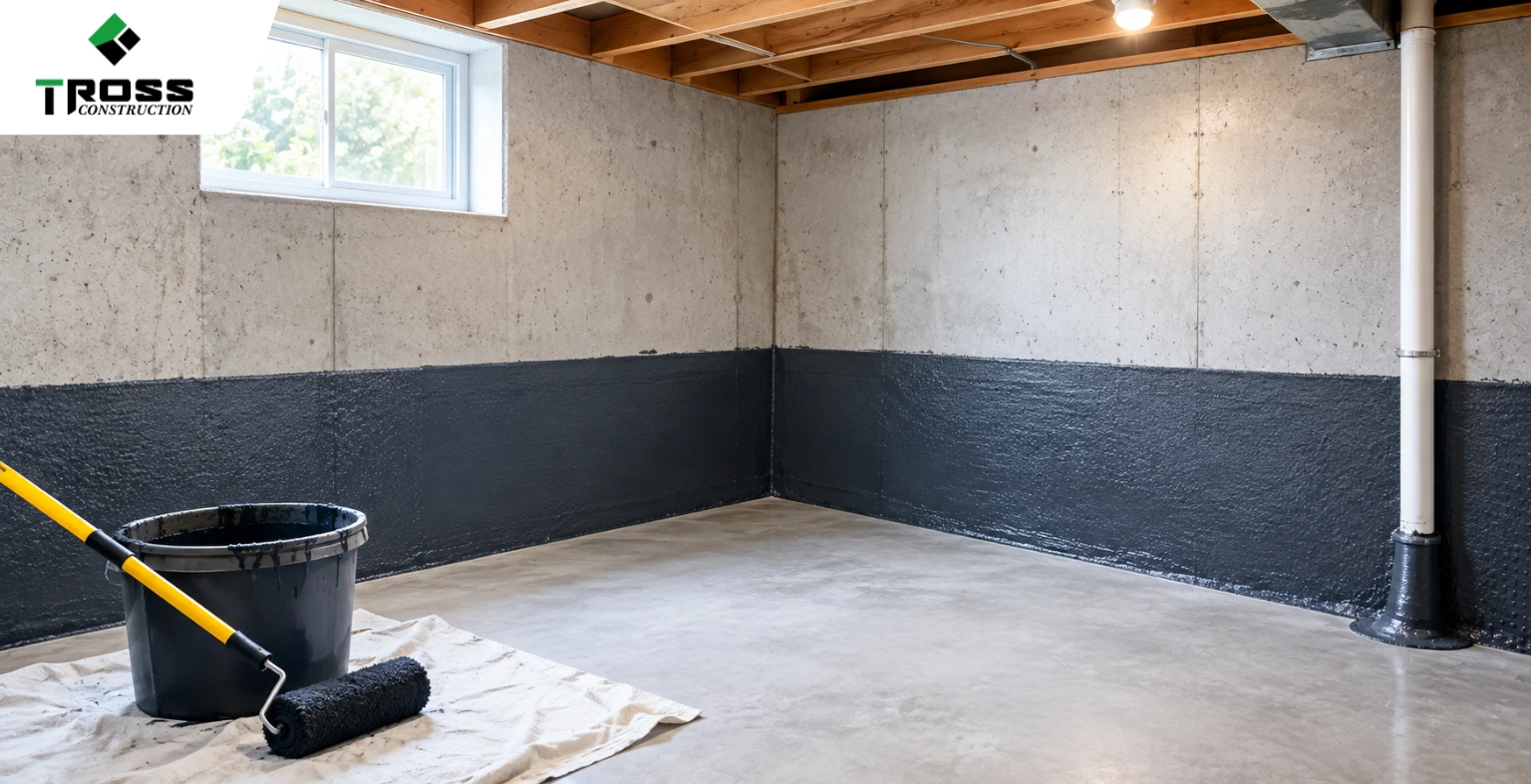
Most homeowners dread discovering a damp or flooded basement, a common issue that threatens your home’s foundation and air quality. You can proactively protect your property and belongings from water damage, transforming a previously unusable space into a dry, functional area. This guide offers nine practical tips to help you achieve a watertight basement.
Core Principles of Basement Wall Waterproofing
Identifying the primary sources of moisture and seepage
Pinpointing where water enters your basement is the first step. You must look for common culprits such as cracks in the foundation walls, gaps around windows or pipe penetrations, and even porous concrete itself.
The impact of hydrostatic pressure on foundation integrity
Hydrostatic pressure, the force exerted by water in the soil against your basement walls, represents a significant threat. This constant external pressure can compromise even the strongest foundations over time.
This relentless force pushes moisture through microscopic pores in concrete and mortar joints, leading to persistent dampness and eventually, visible water infiltration. You might notice efflorescence, a white powdery residue on the walls, or even bowing in extreme cases, indicating the immense strain your foundation is enduring from the surrounding saturated soil.
Critical Factors Influencing Moisture Control
Understanding the specific conditions around and within your home is paramount for effective moisture control. You must consider several environmental and structural elements that directly influence how water interacts with your basement. Overlooking any of these factors can compromise even the most diligently applied waterproofing efforts, leading to recurring issues and wasted resources.
You face unique challenges depending on your property’s location and construction. For instance, a home situated at the bottom of a slope will naturally experience different hydrostatic pressures than one on higher ground. Similarly, the age and type of your foundation materials play a significant role in their inherent resistance to water intrusion. Addressing these underlying conditions proactively will result in a more durable and effective waterproofing solution.
- Hydrostatic Pressure: The force exerted by water against your basement walls.
- Capillary Action: The ability of water to flow in narrow spaces against the force of gravity.
- Soil Permeability: How easily water can pass through the soil surrounding your foundation.
- Foundation Material Porosity: The amount of void space within your foundation materials, affecting water absorption.
The interplay of these elements dictates the scope and intensity of the waterproofing strategies you should employ.
Assessing local soil composition and drainage capacity
Examining your property’s soil type is imperative. Clay-rich soils, for example, retain water longer, increasing hydrostatic pressure against your foundation. Sandy soils, conversely, drain more quickly but can still allow water to penetrate if grading is poor. You need to understand the natural water flow around your home.
Evaluating foundation materials and existing wall cracks
The materials used in your foundation, such as poured concrete, concrete block, or stone, each possess different permeability characteristics. You should meticulously inspect your basement walls for any existing cracks, no matter how small. Even hairline fractures can serve as entry points for water.
A thorough inspection involves not just visible surface cracks but also identifying potential weaknesses in mortar joints (for block or stone foundations) or cold joints (where different concrete pours meet). You might find evidence of efflorescence, a white, powdery residue, which indicates past or ongoing moisture migration through the material. Understanding the nature and location of these imperfections guides the selection of appropriate sealants and repair methods, ensuring you address all potential pathways for water intrusion.
A Step-by-Step Guide to Sealing Your Foundation
| Phase 1: Excavation and Inspection | Careful excavation around the foundation perimeter exposes the exterior walls. During this stage, you will thoroughly clean and inspect the exposed surfaces for existing cracks or damage, which must be addressed before any sealing application. |
| Phase 2: Surface Preparation | This phase involves meticulous cleaning and patching of the foundation walls. Removing all dirt, loose debris, and efflorescence ensures proper adhesion of subsequent waterproofing materials. |
| Phase 3: Primary Moisture Barrier Application | Applying the chosen waterproofing membrane, whether liquid or sheet-based, forms the primary defense against water intrusion. This step demands precision to achieve complete and uniform coverage. |
| Phase 4: Drainage System Installation | Installing a perimeter drain tile system, often coupled with a gravel backfill, diverts water away from the foundation. This prevents hydrostatic pressure buildup against the newly sealed walls. |
| Phase 5: Backfill and Grading | Careful backfilling of the excavated area, along with proper grading of the surrounding landscape, ensures that surface water flows away from the building. This final step significantly reduces the likelihood of future water issues. |
Detailed surface preparation and cleaning protocols
Thorough preparation of the foundation surface directly impacts the effectiveness of your waterproofing efforts. You should remove all loose debris, dirt, and any existing coatings that are not firmly bonded. A power washer can be effective for cleaning, followed by a wire brush for stubborn areas, ensuring a pristine surface for adhesion.
Correct application of the primary moisture barrier
Applying the primary moisture barrier requires careful attention to manufacturer specifications. You must achieve complete and uniform coverage across the entire foundation wall. Overlaps, if using sheet membranes, need to be sealed meticulously to prevent any gaps. Proper application of the barrier ensures an unbroken shield against water infiltration. Many liquid membranes, for instance, demand specific temperature ranges for application and curing, which you must strictly observe. Inadequate thickness or missed spots can compromise the entire system, allowing moisture to penetrate through what appears to be a sealed wall. You might consider a second coat for added assurance, especially in areas prone to high hydrostatic pressure.
Finalizing backfill and landscape grading
The final backfill and grading around your foundation play a critical role in long-term moisture management. You need to ensure the soil slopes away from the house, preventing water from pooling near the foundation walls. Compacting the soil in layers helps to minimize settlement and maintain the desired grade. Creating an effective grade prevents surface water from saturating the soil directly adjacent to your foundation. You should aim for a minimum slope of six inches over the first ten feet away from the building, directing runoff towards appropriate drainage points. This simple yet effective measure significantly reduces the hydrostatic pressure on your foundation walls and keeps your basement dry.
Pros and Cons of Professional vs. DIY Waterproofing
Deciding between a professional waterproofing service and a do-it-yourself approach involves weighing various factors, from cost to expertise. Understanding these distinctions helps you make an informed choice for your home’s long-term protection. Consider the immediate financial outlay against the potential for future repairs or diminished property value.
| Professional Waterproofing Pros | DIY Waterproofing Cons |
|---|---|
| Expert assessment of underlying issues | Risk of misdiagnosing the problem source |
| Access to industrial-grade materials and equipment | Limited to consumer-grade sealants and tools |
| Guaranteed workmanship with warranties | No professional guarantee for results |
| Experienced application techniques for optimal results | Potential for improper application and missed spots |
| Time-saving and convenience | Significant time and labor commitment |
| Compliance with local building codes | Lack of awareness of local regulations |
| Comprehensive solutions for complex problems | Difficulty addressing severe or structural issues |
| Reduced risk of future water damage | Higher chance of recurring moisture problems |
Long-term cost-efficiency of Tross Construction services
Opting for Tross Construction services can present significant long-term savings, even if the initial investment seems higher. Their comprehensive approach and durable materials minimize the need for frequent repairs or reapplication, protecting your property value and preventing costly structural damage over decades. This strategic investment safeguards your home’s integrity.
Risks associated with improper DIY sealant application
Applying sealants incorrectly can lead to ineffective waterproofing, leaving your basement susceptible to moisture intrusion. Gaps, uneven coats, or using unsuitable products may create superficial barriers that fail under pressure, allowing water to penetrate your foundation. Such errors often necessitate costly professional remediation later. You might misinterpret product instructions or rush the application process. For example, failing to adequately prepare the surface by cleaning and drying it thoroughly prevents proper adhesion of sealants, making them peel or crack prematurely. Overlooking small cracks or pinholes during application means water will inevitably find these weak points, undermining your entire effort. Incorrectly mixing two-part epoxies or applying them in unsuitable temperature conditions also compromises their efficacy and durability.
Comparing structural warranties and peace of mind
Professional waterproofing often includes robust structural warranties, providing a safeguard against future issues and offering immense peace of mind. These guarantees typically cover labor and materials for many years, sometimes even for the life of the structure.
| Professional Warranty Benefits | DIY Peace of Mind Limitations |
|---|---|
| Comprehensive coverage for materials and labor | No formal warranty or recourse for failure |
| Transferable warranties, increasing home value | Personal responsibility for all future repairs |
| Expert support for covered issues | Reliance on personal problem-solving skills |
| Legal protection against product or service failure | No legal backing for DIY efforts |
| Assured quality and longevity of work | Uncertainty regarding long-term effectiveness |
A professional warranty from a reputable company like Tross Construction assures you that any failure in their waterproofing system will be addressed without additional cost. This provides a clear advantage over DIY projects, where you bear sole responsibility for any subsequent leaks or water damage. Should your home experience issues years down the line, a professional warranty provides a clear path to resolution, often covering extensive repairs that could otherwise cost thousands. You gain confidence knowing that a team of experts stands behind their work, ready to rectify any unforeseen complications.
Summing up
Protecting your basement from water infiltration requires a multi-faceted approach, addressing both interior and exterior vulnerabilities. You can achieve a dry and usable lower level by implementing proper drainage, sealing cracks, and applying appropriate waterproofing membranes, safeguarding your home’s foundation for years to come.
FAQ
Q: What is the primary cause of basement wall leaks, and how do I identify it?
A: Hydrostatic pressure, the force exerted by water in the soil against your basement walls, is a leading cause of leaks. You can often identify this issue by observing efflorescence, a white powdery residue on the walls, or by noticing damp spots, discolored areas, or even active trickles of water, particularly after heavy rainfall.
Q: Can interior sealants alone provide a permanent waterproofing solution?
A: Interior sealants, such as waterproof paints or epoxy coatings, can offer a temporary barrier against minor dampness and condensation. These solutions are generally effective for managing surface moisture but do not address the root cause of water intrusion from the exterior.
Q: How does proper gutter and downspout management contribute to basement waterproofing?
Proper gutter and downspout management directs rainwater away from your home’s foundation, reducing water buildup, soil saturation, and the risk of leaks or moisture entering the basement.
Q: What role does exterior excavation play in comprehensive basement waterproofing?
Exterior excavation exposes the foundation walls, allowing professionals to repair cracks, apply waterproof membranes, and install proper drainage systems to prevent water intrusion.
Q: Are there specific landscaping techniques that can help prevent basement water issues?
Yes. Proper grading, sloping the ground away from the foundation, using well-placed drainage systems, and avoiding water-retaining plants near the house can help keep water away from the basement.