
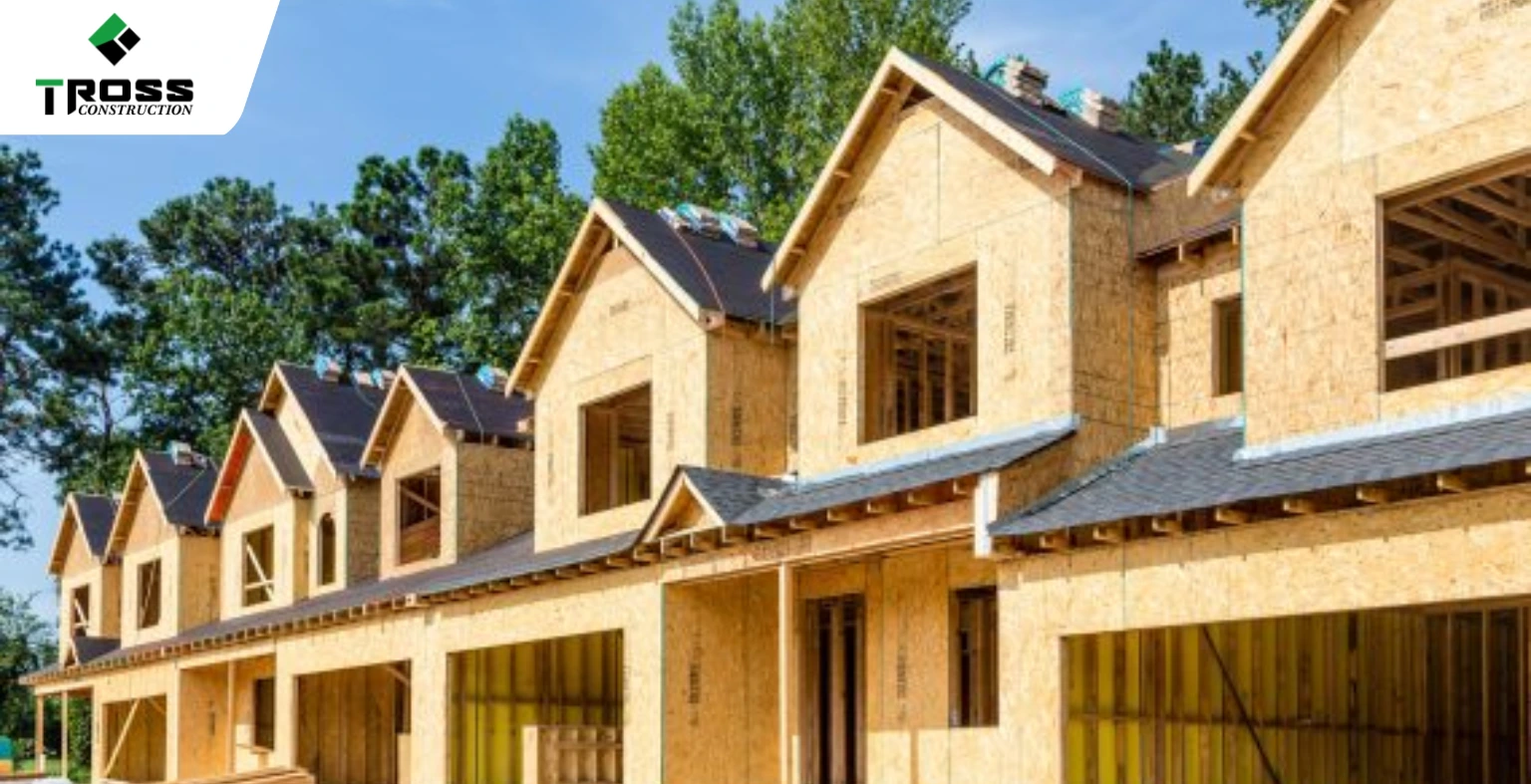
A young couple in Rosemont spent months touring 1960s bungalows. Every house told the same story: a roof close to the end of its life, wiring nobody had touched in decades, and a basement that smelled like it had seen one too many wet springs. After the third deal fell through over the same issues, they gave up on resale altogether and started looking at new construction homes instead.
They’re not alone. Montreal’s actual housing starts jumped 10% year-over-year in June 2026, according to the Canada Mortgage and Housing Corporation. Most articles on this topic recite the same five bullet points.
This one gets into the parts that actually change a buyer’s decision: cost, timing, and what nobody mentions until the contract’s already signed.
Building or buying new doesn’t have to feel like a gamble.
Tross Construction has handled new home builds across Montreal and Quebec City for over 16 years as a licensed RBQ contractor. Get a free project quote and talk through your options with a real builder, not a script.
Why More Buyers Are Choosing New Construction in Montreal
Montreal’s housing stock is getting old, and it shows.
Changing Housing Trends in Montreal
Walk through Villeray or Hochelaga, and you’ll see plenty of charm: plaster moldings, wood floors, and character you can’t buy new. What you won’t see is the insulation behind the walls, usually installed decades before anyone cared about heating bills.
Roofs and furnaces tend to hit the end of their life right around the time an owner decides to sell. So the buyer inherits the timing problem, not the seller.
That’s part of why residential construction activity keeps climbing and why newly built homes keep pulling interest away from older stock.
Who Benefits Most from Newly Built Homes
Not every buyer wants the same thing from a new build. A first-time buyer cares about predictable costs. An investor cares about vacancy risk. Here’s roughly how it breaks down.
| Buyer Type | Main Benefit |
| First-time buyers | Predictable costs, fewer surprise repairs |
| Growing families | Modern layouts with more usable space |
| Investors | Lower vacancy risk, easier long-term maintenance |
| Downsizers | Single-level or low-maintenance designs |
| Eco-conscious buyers | Lower energy bills from day one |
Top Advantages of New Construction Homes
A newly built house sidesteps a lot of headaches that come baked into older properties.
1. Better Energy Efficiency
Old windows leak heat. Older insulation is not as effective as people think. When you combine those two, a February heating bill can quickly become ugly. New builds use sealed envelopes, modern insulation, and furnaces built for efficiency, not just output.
Natural Resources Canada notes that newer homes typically use meaningfully less energy per square foot than homes built decades ago, not a marginal difference, a real one.
2. Modern Floor Plans
Older homes were built for how people lived in 1965, not 2026. Kitchens are closed off. Closets are an afterthought. New builds tend to open things up: bigger kitchens, real storage, and a bonus room that can flex between office and guest space depending on the year.
3. Builder Warranty
Buy resale, and you’re on your own the moment the sale closes. Buy new, and there’s usually a structural and mechanical warranty backing the build for years afterward. That difference alone can offset thousands in early repair costs.
4. Lower Maintenance Costs
Old roofs, old pipes, old wiring. They don’t fail all at once; they fail gradually and expensively. A new build is bought years before any of that becomes a real conversation.
5. Smart Home Technology
Retrofitting a smart thermostat or a security camera into a 1970s house usually means opening a wall somewhere. New builds get wired for it before drywall goes up, so the tech question is a checkbox, not a renovation.
6. Customization Options
Resale homes come as-is, and “almost right” is often the best a buyer gets. New builds flip that finishes, layout, and materials, all chosen before a single wall goes up.
New Home vs. Existing Home
| Feature | New Construction | Existing Home |
| Energy costs | Lower, modern systems | Higher, older systems |
| Repairs needed | Minimal for years | Often immediate |
| Warranty | Included | Rarely available |
| Customization | High | Limited |
New Builds vs. Older Homes
Buyers tend to weigh the same handful of factors, whether they realize it or not. Here’s how a new build stacks up against something older.
| Factor | New Construction | Older Home |
| Cost | Higher upfront | Lower upfront |
| Maintenance | Low for 5-10 years | Ongoing and unpredictable |
| Energy | Efficient by design | Depends on retrofits |
| Warranty | Standard | Usually expired |
| Customization | Full control | Limited to renovations |
| Resale value | Strong in growing areas | Varies by condition |
Is Building New Better Than Renovating?
Problem: A lot of Montreal homeowners outgrow their house long before they’re ready to admit it and even longer before they act on it.
Consequence: Renovating an older structure sounds simpler on paper. Then a contractor opens a wall and finds wiring from three renovations ago or water damage nobody disclosed, and the budget stops making sense.
Solution: A home extension works well when the foundation underneath is genuinely sound. Building new makes more sense once the structure itself, not just the square footage, is the actual problem. An exterior renovation can stretch a home’s life a good while longer, but it won’t fix anything buried in the frame or footings.
Things Buyers Should Consider Before Purchasing
A model home photographs beautifully. It doesn’t show the permit history, the soil report, or the fine print in the contract, and those are the things that actually determine whether a build goes smoothly. Worth checking before signing anything:
- Builder reputation and completed project history
- Location and long-term neighbourhood growth
- Construction quality and materials used
- Warranty length and what it actually covers
- Nearby schools, transit, and amenities
- Realistic resale value for the area
- Project timeline and any penalty clauses for delays
Why Choosing the Right Construction Company Makes a Difference
Two houses can share an identical floor plan and age in completely different ways, and the difference almost always traces back to who built them. It shows up in the small stuff:
- How permits get handled,
- Whether timelines are honest or not
- Whether anyone answers the phone when something goes wrong mid-project.
- Are there any corners cut on materials or rushing the schedule?
The bill for that shows up years later, usually after the contractor who did the work is long gone.
The Montreal Build-Ready Method
A quick way to size up a builder before signing anything:
- Verify: Confirm RBQ licensing and insurance directly, not from a business card.
- Visit: Walk a finished project in person. Photos hide a lot.
- Vet: Ask, specifically, how they’ve handled permit delays and cost overruns before.
- Value: Compare what the warranty actually covers, not just the bottom-line quote.
Ready to compare your options with confidence? Tross Construction’s licensed team manages permits, materials, and timelines from day one. Book a free consultation and get a straight answer on cost and scope.
What Most New Construction Home Guides Don’t Tell You
- Soil conditions and lot grading can quietly add cost before framing even starts. It’s rarely in the original quote.
- Montreal’s municipal permit timelines run longer than most builders initially tell you.
- A standard builder’s warranty usually stops at the structure. Landscaping and driveway settling aren’t covered.
- Provincial energy rebates can offset upgrade costs, but only if they’re applied for before construction begins, not after.
- A fixed-price contract protects a buyer far better than a “rough estimate” ever will.
Frequently Asked Questions
Is it cheaper to build new or buy an older home in Montreal?
Older homes cost less upfront, almost always. New builds tend to even that out, or beat it, once ten years of lower energy and repair bills get factored in.
How long does new home construction take in Montreal?
Most custom builds run eight to twelve months. Permit delays and a rough winter can stretch that further than buyers expect.
Do new builds come with a warranty?
Yes, in most cases. A structural and mechanical warranty is standard, though what it actually covers varies by builder.
Are new builds more energy-efficient than older homes?
Generally, yes. Natural Resources Canada points to newer homes using less energy per square foot, largely due to modern insulation and equipment standards.
Can buyers customize a new build?
Yes. Layout, finishes, and materials are all decided before construction starts. That’s one thing a resale home simply can’t offer.
Why New Construction Homes Continue to Be a Smart Long-Term Investment
Montreal’s market will keep shifting the way it always has. What doesn’t shift is the math: lower energy costs, fewer surprise repairs, and a warranty that actually protects the buyer, all compounding over a decade of ownership.
A few things worth keeping in mind:
- A new build costs more upfront but tends to even out, or win, over time.
- Builder reputation matters more than any single finish or feature.
- Warranty coverage and permit handling are usually what separate a smooth build from a stressful one.
Considering a new build in Montreal for 2026? Tross Construction has built and renovated homes across the city for over 16 years as a licensed RBQ contractor. Contact Tross Construction for a free project quote.