
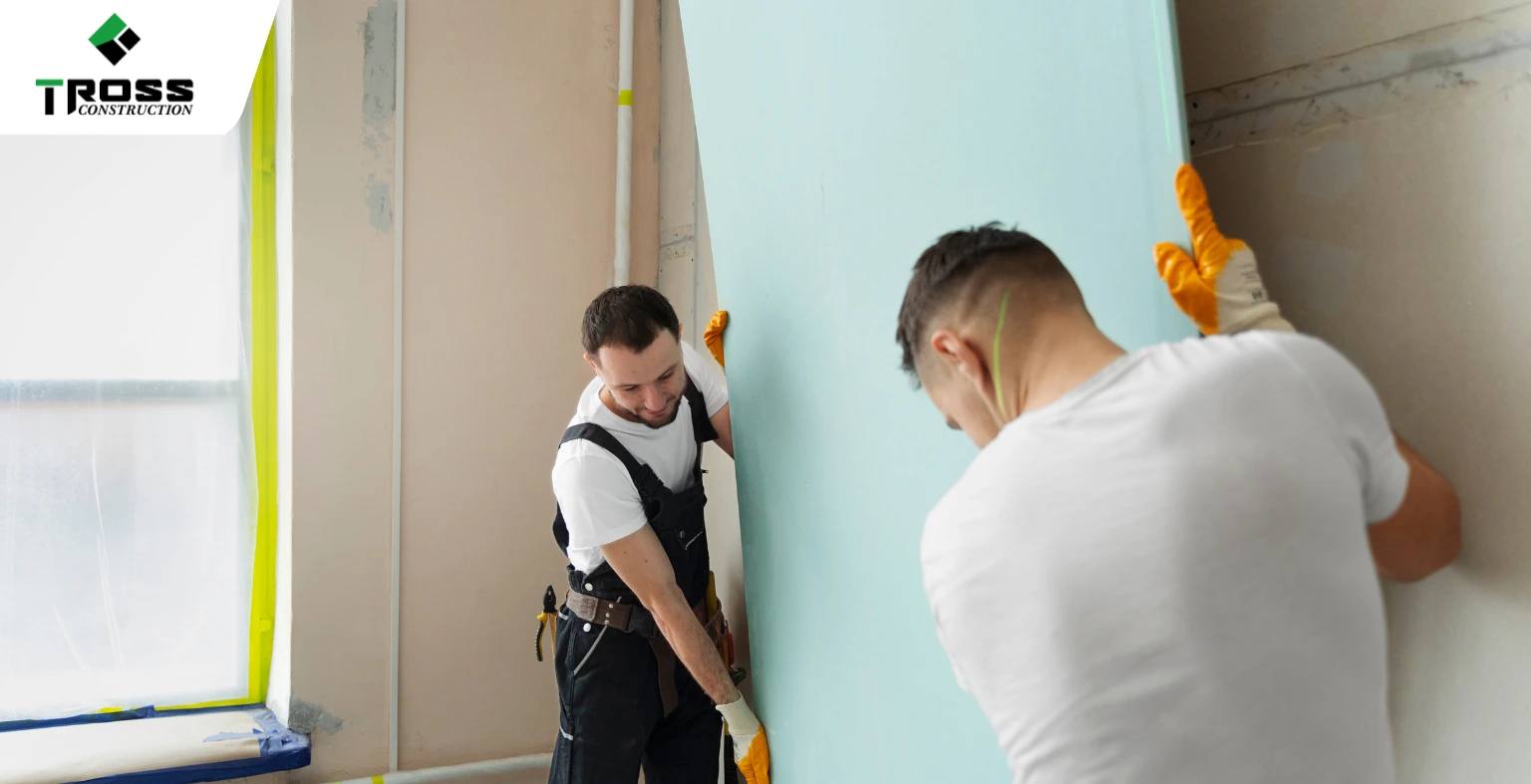
How to Prepare Your Site for Tross Construction
Clearing the workspace for maximum efficiency
Before any insulation work begins, you should clear the entire basement of obstructions. Moving stored items, old furniture, or debris ensures installers have unrestricted movement, which prevents delays and potential damage to your belongings. A clear path around the perimeter, and especially near walls, allows for optimal access.
Addressing moisture and humidity before installation
You must resolve any existing moisture issues before installing new insulation. Water intrusion, condensation, or high humidity levels will compromise insulation effectiveness and can lead to mold growth. Identifying and fixing leaks or dampness is a prerequisite for a successful insulation project. Addressing persistent moisture requires a thorough investigation of your basement’s exterior and interior. You might discover a need for exterior waterproofing, such as installing a French drain or repairing foundation cracks, to prevent water from entering. Inside the basement, a dehumidifier can manage ambient humidity, maintaining levels below 60% relative humidity, which creates an environment less conducive to mold and mildew formation behind new insulation.
Expert Tips for Locating Affordable Basement Insulation Near Me
Securing cost-effective basement insulation demands a proactive approach, extending beyond merely searching for the lowest price. You will find value in understanding local market dynamics and installer specializations.
- Explore government rebates and utility company incentives specific to your region.
- Consider less conventional, yet effective, insulation materials like mineral wool or rigid foam boards.
- Investigate community programs offering energy efficiency upgrades.
Thou should always prioritize long-term performance over initial savings alone.
Comparing quotes from local certified installers
Obtaining multiple bids allows you to gauge fair market pricing and compare service offerings. You will gain insight into different material recommendations and installation methodologies. Insulation Quote Comparison Checklist
| Installer Certifications | Verify licenses and insurance. |
| Material Specifications | Confirm R-value and type. |
| Warranty Details | Understand coverage for labor and materials. |
| Project Timeline | Clarify start and completion dates. |
Timing your project to avoid seasonal price hikes
Strategic scheduling can significantly reduce overall costs. You can often find better rates during off-peak seasons.
Many insulation contractors experience peak demand in late fall and early winter as homeowners prepare for colder weather or in late spring and early summer when focusing on cooling efficiency. Scheduling your basement insulation project during the shoulder seasons, such as early spring or late autumn, can often result in more competitive pricing and greater flexibility in scheduling for your chosen installer. You might also find contractors more willing to negotiate on labor rates during these less busy periods, potentially saving you hundreds on a typical basement insulation project.
How-to Estimate Labor Expenses for Basement Insulation Near Me
Pinpointing labor costs requires understanding local market rates and project scope. You should obtain at least three detailed bids from qualified insulation contractors in your area, ensuring each bid specifies the type of insulation and the estimated hours or fixed project fee. This comparison provides a realistic range for your budget.
Hourly rates vs. fixed project pricing
Contractors often present bids using either an hourly rate or a fixed project price. An hourly rate offers transparency in daily work, but a fixed project price provides cost certainty, protecting you from unexpected time overruns. For most insulation projects, a fixed bid simplifies budgeting.
Why Tross Construction offers superior value in 2026
Tross Construction consistently delivers exceptional value through optimized processes and bulk material purchasing power. Our experienced crews complete projects efficiently, translating into competitive pricing without compromising quality. You benefit from our established relationships with suppliers and streamlined project management.
Our commitment to continuous training ensures that Tross Construction technicians are proficient in the latest insulation techniques and safety protocols. We also utilize advanced thermal imaging during post-installation inspections, guaranteeing optimal coverage and identifying any potential thermal bridges. This meticulous approach minimizes callbacks and maximizes the long-term energy savings for your home.
Calculating the Return on Investment for Basement Insulation Near Me
Understanding the financial benefits of basement insulation involves more than just the upfront cost. You should consider both immediate savings on utility bills and the long-term impact on your property’s value, creating a comprehensive picture of your investment’s efficacy.
Energy bill reductions in the Montreal, Canada, climate
Insulating your basement in Montreal’s climate can significantly cut heating costs. Expect noticeable reductions in your monthly energy bills, particularly during the harsh winter months, as heat loss through uninsulated foundations diminishes considerably.
Enhancing the resale value of your residential property
Upgrading your basement’s insulation contributes directly to your home’s market appeal. Prospective buyers often prioritize energy efficiency, recognizing the long-term savings and comfort it provides.
A well-insulated basement transforms a previously underutilized or uncomfortable space into a valuable part of the home, potentially allowing you to market it as an additional finished living area. Homebuyers in competitive markets, for example, frequently seek properties with lower operating costs and improved indoor air quality, both direct benefits of proper basement insulation. This can translate into a higher appraisal value and a quicker sale, recouping a significant portion, or even more, of your initial investment.
To wrap up
You can expect basement insulation costs in 2026 to vary widely, influenced by material choices like rigid foam or spray foam, your home’s specific foundation type, and local labor rates. Investigating available rebates and understanding the long-term energy savings will provide a clearer picture of your overall investment.
FAQ
Q: What factors most influence the cost of basement insulation in 2026?
A: Several key factors determine the overall expense. The type of insulation material chosen, for instance, significantly impacts the price, with spray foam generally costing more per square foot than fiberglass batts or rigid foam boards. The size and accessibility of the basement also play a considerable role; larger basements require more material and labor, while difficult-to-reach areas, such as crawl spaces or sections with extensive piping, can increase installation time and complexity. Local labor rates, which fluctuate based on regional demand and cost of living, represent another major component of the total cost. A contractor in a high-demand urban area will likely charge more for installation than one in a rural setting.
Q: How do different insulation materials compare in terms of cost effectiveness for basements?
A: Each material offers a distinct balance of upfront cost and long-term performance. Fiberglass batts are typically the least expensive option initially, providing a good R-value for their price, though they can be susceptible to moisture issues if not properly installed and protected. Rigid foam boards, such as XPS or polyisocyanurate, offer higher R-values per inch and are more resistant to moisture, making them a popular choice for basement walls, albeit at a higher material cost. Spray foam insulation, whether open-cell or closed-cell, provides the best air sealing and highest R-value, effectively preventing thermal bridging and moisture intrusion, but it also carries the highest material and installation cost. The most cost-effective solution often depends on specific climate conditions, local building codes, and the homeowner’s budget and energy efficiency goals.
Q: Can DIY basement insulation save money, and what are the potential drawbacks?
A: Undertaking a DIY basement insulation project can certainly reduce labor costs, which often constitute a significant portion of the total expense. Homeowners can save money on materials like fiberglass batts or rigid foam boards by purchasing them directly from suppliers or big-box stores. There are, however, several potential drawbacks. Improper installation can lead to reduced R-values, air leaks, and moisture problems, negating any cost savings and potentially causing long-term damage like mold growth. Specialized materials, such as spray foam, require professional equipment and expertise to apply correctly and safely. Many local building codes also have specific requirements for basement insulation, and a DIY installation might not meet these standards, leading to inspection failures or future remediation costs.
Q: What impact do regional climate and building codes have on basement insulation costs in 2026?
A: Regional climate conditions directly influence the recommended R-values for basement insulation, which in turn affects material costs. Colder climates, for instance, typically require higher R-values to achieve adequate energy efficiency, necessitating thicker or more advanced insulation materials. Building codes in different regions also dictate minimum R-value requirements and specific installation methods for basements, particularly concerning moisture barriers and fire safety. These regulations can mandate the use of particular materials or installation techniques that might be more expensive than alternatives. For example, some areas might require a specific type of vapor barrier or a thermal break between the foundation wall and the insulation, adding to both material and labor expenses.
Q: How does the condition of the existing basement affect insulation costs?
A: The current state of the basement can significantly impact the preparation work required, influencing overall costs. Basements with existing moisture issues, such as leaks or efflorescence, will need extensive waterproofing or drainage solutions before insulation can be installed, adding substantial expense. Any mold or mildew present must be professionally remediated, another costly prerequisite. Uneven or damaged foundation walls may require repairs or leveling to ensure proper insulation adherence and performance. Furthermore, if old, ineffective insulation needs to be removed, this demolition and disposal adds labor time and associated fees to the project’s bottom line. A clean, dry, and structurally sound basement provides the most straightforward and least expensive insulation installation.